
When planning a conference general session or large meeting, one of the most common production questions is how visual content will be delivered to the audience. For many years, projection systems were the standard solution for conference presentations. Today, LED video walls are becoming increasingly common in general sessions, corporate meetings, and association conferences.
Both technologies can support professional events. The key difference is that they each offer unique strengths depending on the venue, program goals, and production design.
For event planners evaluating these options, the decision often comes down to a few practical factors: room conditions, audience size, content requirements, and overall event experience. Understanding how LED walls and projection systems differ can make it easier to choose the right solution for the program.
Understanding the Two Technologies (LED Walls & Projection Mapping)
Before comparing them, it helps to understand what each system actually is.
Projection uses a projector that sends an image onto a screen. The projector is typically positioned either on the floor at the rear of the room or rigged from truss above the audience. The image is displayed on a large projection surface that reflects the projected light toward the audience.
LED video walls work differently. Instead of projecting light onto a screen, the display itself produces light through thousands of individual LED pixels arranged in panels. These panels are assembled together to form a seamless video surface that can be scaled to different sizes.
Because of this fundamental difference, the two technologies behave differently in a conference environment.
Brightness and Room Lighting
One of the most noticeable differences between LED walls and projection is brightness.
Projection systems rely on reflected light. The projector shines an image onto the screen, and that image is reflected toward the audience. Because of this, room lighting conditions affect how visible the image appears. In rooms with strong ambient light, projected images can appear washed out unless the lighting is carefully controlled.
LED walls generate their own light. Each pixel emits light directly toward the audience, which means the display remains bright even in well-lit rooms. This can allow production teams more flexibility with lighting design, particularly when the stage environment includes brighter lighting or architectural elements that would normally interfere with projection.
For conferences where lighting design plays an important role in the atmosphere of the room, LED walls can offer an advantage. However, projection remains very effective when room lighting can be controlled and the projector brightness is properly matched to the screen size.
Screen Size and Visibility
Audience visibility is another major factor when choosing between projection and LED.
Projection systems work well for large images, especially in traditional ballroom environments. Large projection screens can provide clear visuals for audiences seated at a distance, particularly when dual screens are used to ensure visibility from different seating areas.
LED walls also support large display surfaces, but their design flexibility allows production teams to create custom shapes and configurations that are not possible with traditional projection screens. Instead of a single rectangular screen, LED walls can be designed as wide panoramic displays, multi-panel arrangements, or integrated scenic elements.
For general sessions where visual impact is part of the experience, LED walls often provide greater creative flexibility. For events focused primarily on presentation content, projection may still provide a clean and effective solution.

Content Design Considerations
Another factor planners often consider is the type of content that will appear on screen.
Projection systems display content effectively when slides, speaker visuals, or basic video elements are the primary focus. Most presentation software is designed around standard aspect ratios that align well with projection screens.
LED walls introduce additional creative possibilities. Because they can be built in different sizes and aspect ratios, content can be designed to span a much wider canvas. This allows event designers to incorporate motion graphics, background visuals, and scenic digital environments that extend beyond traditional presentation slides.
That said, LED walls require thoughtful content preparation. If presentation materials are designed for a standard projection format but displayed on a wide LED wall without adjustment, the result may not take full advantage of the display’s capabilities.
Early production planning helps ensure that screen format and presentation design are aligned. Planners who are interested in exploring this topic further can read more in our article on why early production planning matters for conference staging and AV, which explains how production decisions influence the overall event experience.
Venue Conditions and Technical Infrastructure
Venue characteristics often influence which display technology works best.
Projection systems require adequate throw distance between the projector and the screen. In some venues, ceiling height or room depth can affect where projectors can be placed. Rigging positions, lighting structures, and architectural features may also influence projector placement.
LED walls are typically ground supported or flown from truss structures. Because the panels create their own light, they do not require long throw distances or specific projection angles. This can simplify certain installations, particularly in rooms where projection paths would be difficult to maintain.
However, LED walls do require structural support, power distribution, and careful alignment during installation. These factors are routinely handled by experienced production teams, but they do influence planning and logistics.
Venue walkthroughs with a production partner can help determine which technology will integrate most smoothly into the space.
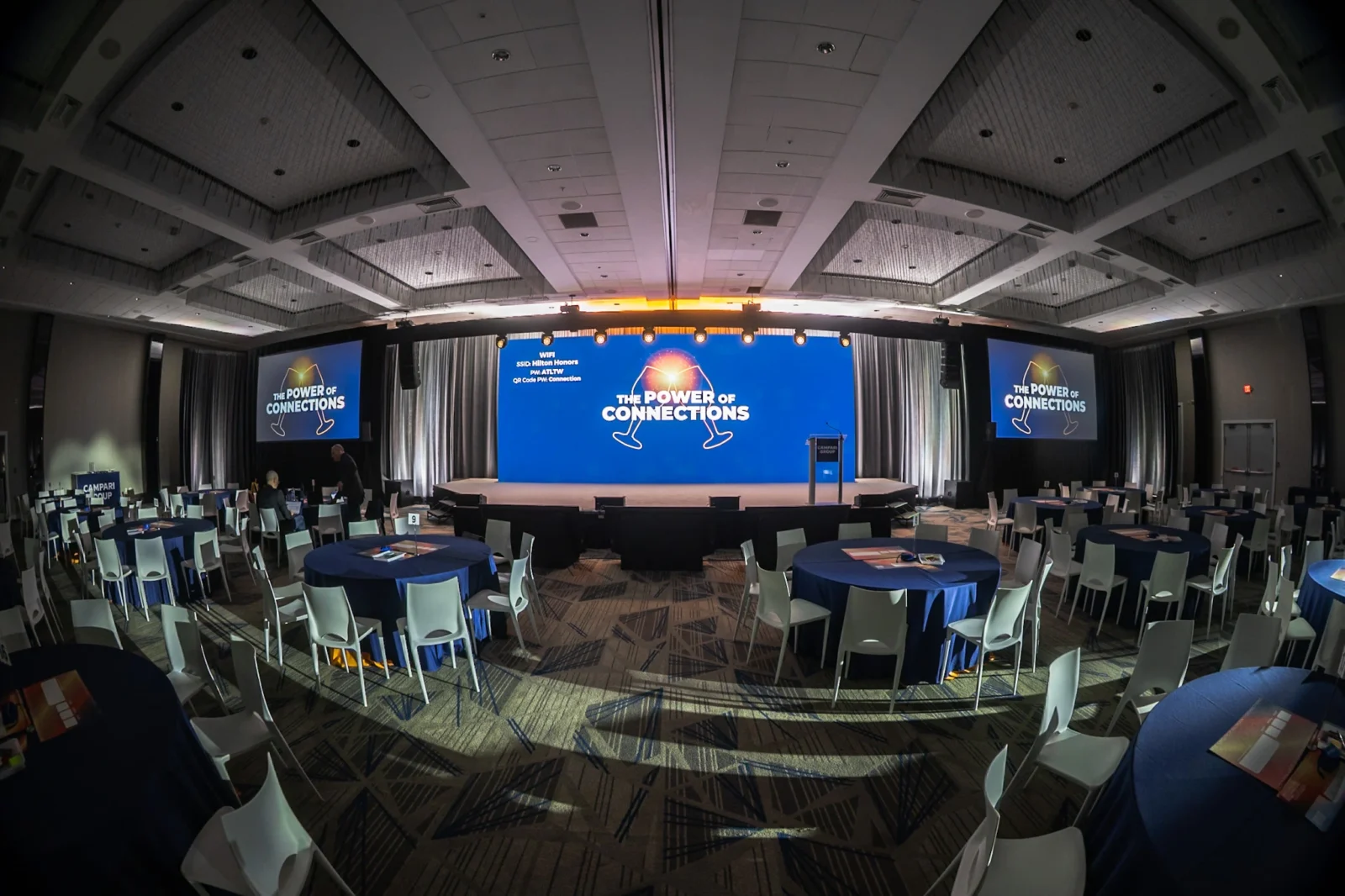
Production Design and Stage Environment
Beyond the technical aspects, the visual design of the stage often influences the decision between projection and LED.
Projection screens typically appear as distinct surfaces on stage. They are effective for delivering content, but they do not always blend into scenic design elements. For many conferences this is perfectly appropriate, especially when the focus is on speakers and presentations.
LED walls can function both as presentation displays and as scenic design elements. Because they emit light and can display dynamic visuals, they can become a central visual feature of the stage environment.
Production teams often use LED walls to create digital backdrops, immersive graphics, or transitions between sessions. These elements can enhance the visual identity of the event and create a more dynamic environment for the audience.
The choice ultimately depends on how central the visual environment is to the program experience.
Budget Considerations
Budget is naturally part of the conversation when evaluating display technologies.
Projection systems have been used in conferences for decades and remain a cost-effective option for many programs. The equipment, installation process, and operational requirements are well understood across the industry.
LED walls involve different equipment and installation processes, which can influence cost depending on the size and complexity of the display. However, as LED technology becomes more common in live events, it is increasingly being incorporated into conferences of many different scales.
Rather than thinking of the decision purely in terms of cost, many planners evaluate how each option supports the goals of the program. In some cases projection provides exactly the right balance of functionality and efficiency. In others, LED walls offer an experience that aligns better with the visual goals of the event.
A production partner can help planners explore options that fit within the available budget while still supporting the event’s design vision.
Audience Engagement and Visual Impact
From the attendee’s perspective, the most important factor is whether they can clearly see and engage with the content.
Projection screens provide reliable presentation visibility when properly designed. Attendees can follow slides, watch video segments, and stay connected to the speaker’s message.
LED walls often create a stronger visual presence in the room. Because they are brighter and can display dynamic content across a larger canvas, they can contribute to a more immersive environment.
This does not mean that one technology is universally better than the other. The right choice depends on the nature of the event, the expectations of the audience, and the overall design approach.
For leadership summits, board meetings, or educational conferences, projection may provide exactly the level of visual support needed. For product launches, corporate conferences, or high-energy general sessions, LED walls may enhance the atmosphere of the room.
How Production Teams Help Guide the Decision
For planners who do not work with AV systems every day, evaluating display technologies can feel technical at first. Fortunately, this decision rarely needs to be made in isolation.
Experienced production partners work closely with planners to evaluate venue conditions, program goals, and budget considerations before recommending a display approach. They can provide visual examples, system diagrams, and layout options that help planners understand how the room will look once the event is installed.
This collaborative process helps ensure that the display technology supports both the logistical needs of the event and the overall audience experience.
As discussed in our earlier article on early production planning for conference staging and AV, bringing production teams into the conversation earlier often leads to more thoughtful technical design and smoother event execution.
Choosing the Right Solution for the Event
Both LED walls and projection systems are valuable tools in modern event production. The decision between them depends less on which technology is newer and more on how each system aligns with the goals of the program.
Projection remains a reliable and effective solution for many conferences. LED walls offer expanded creative possibilities and visual impact in environments where brightness and design flexibility are important.
When planners evaluate the specific needs of their event and collaborate with experienced production teams, the decision becomes much clearer.
In the end, the goal is not simply to choose a screen technology. It is to create a visual environment that supports the message of the event and ensures that every attendee can see, hear, and engage with the program.