Well-executed events rarely feel complicated to the audience. The program moves as expected, speakers are supported, and the environment reinforces the content rather than distracting from it.
That outcome is not driven by what happens on event day alone. It is the result of a structured production plan developed in advance, where technical decisions, program flow, and venue constraints are aligned into a single, coordinated system.
Across corporate conferences, association meetings, and large-scale programs, this structure is what separates predictable execution from unnecessary risk.
Defining the Production Plan
A production plan is often misunderstood as a collection of equipment or a timeline. In practice, it is closer to an operating framework.
It connects four core elements:
- Program intent: What the event is designed to accomplish and how content will be delivered
- Technical systems: Audio, video, lighting, and staging configured to support that intent
- Venue constraints: Power, rigging, load-in access, sightlines, and room layout
- Execution roles: Who is responsible for each cue, transition, and system on-site
When these elements are developed independently, issues tend to surface during the event. When they are built together, the environment becomes controlled and repeatable.

Well-executed events rarely feel complicated to the audience. The program moves as expected, speakers are supported, and the environment reinforces the content rather than distracting from it.
That outcome is not driven by what happens on event day alone. It is the result of a structured production plan developed in advance, where technical decisions, program flow, and venue constraints are aligned into a single, coordinated system.
Across corporate conferences, association meetings, and large-scale programs, this structure is what separates predictable execution from unnecessary risk.
Defining the Production Plan
A production plan is often misunderstood as a collection of equipment or a timeline. In practice, it is closer to an operating framework.
It connects four core elements:
- Program intent: What the event is designed to accomplish and how content will be delivered
- Technical systems: Audio, video, lighting, and staging configured to support that intent
- Venue constraints: Power, rigging, load-in access, sightlines, and room layout
- Execution roles: Who is responsible for each cue, transition, and system on-site
When these elements are developed independently, issues tend to surface during the event. When they are built together, the environment becomes controlled and repeatable.
Interested in learning more about the differences between LED and projection Check out LED Walls vs Projection: How Conference Planners Decide.

Translating Program Into Technical Design
One of the most important steps in pre-production is translating a run of show into a technical plan.
For example, a general session with keynote speakers, panel discussions, and sponsor content may appear straightforward. In practice, each segment introduces different technical requirements:
- Keynotes require clear sightlines, consistent lighting, and reliable audio reinforcement
- Panels require additional microphone management, seating layout considerations, and camera coverage if capture is involved
- Sponsor content often introduces last-minute media, requiring flexible playback and switching
Without a structured approach, these requirements are handled reactively. With a defined plan, they are accounted for in advance through system design, cue structure, and staffing.
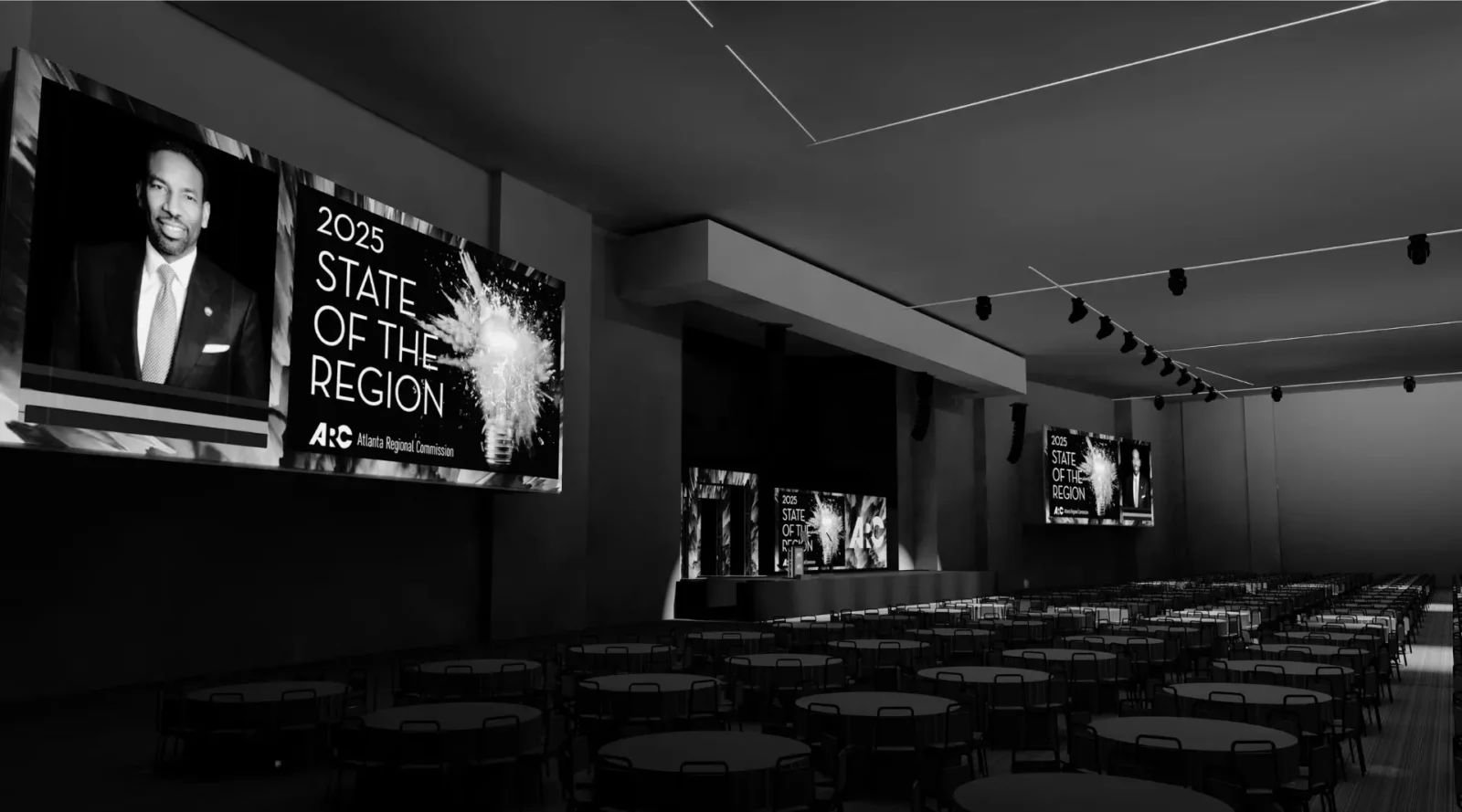
This is where tools such as CAD renderings and system diagrams become valuable. They allow planners, venues, and production teams to align early on layout, equipment placement, and flow before anything is installed on-site.
Want to see how multi-room event production is executed?
Read South Metro Development Outlook Event Production at GICC.


Case Insight: ARC State of the Region
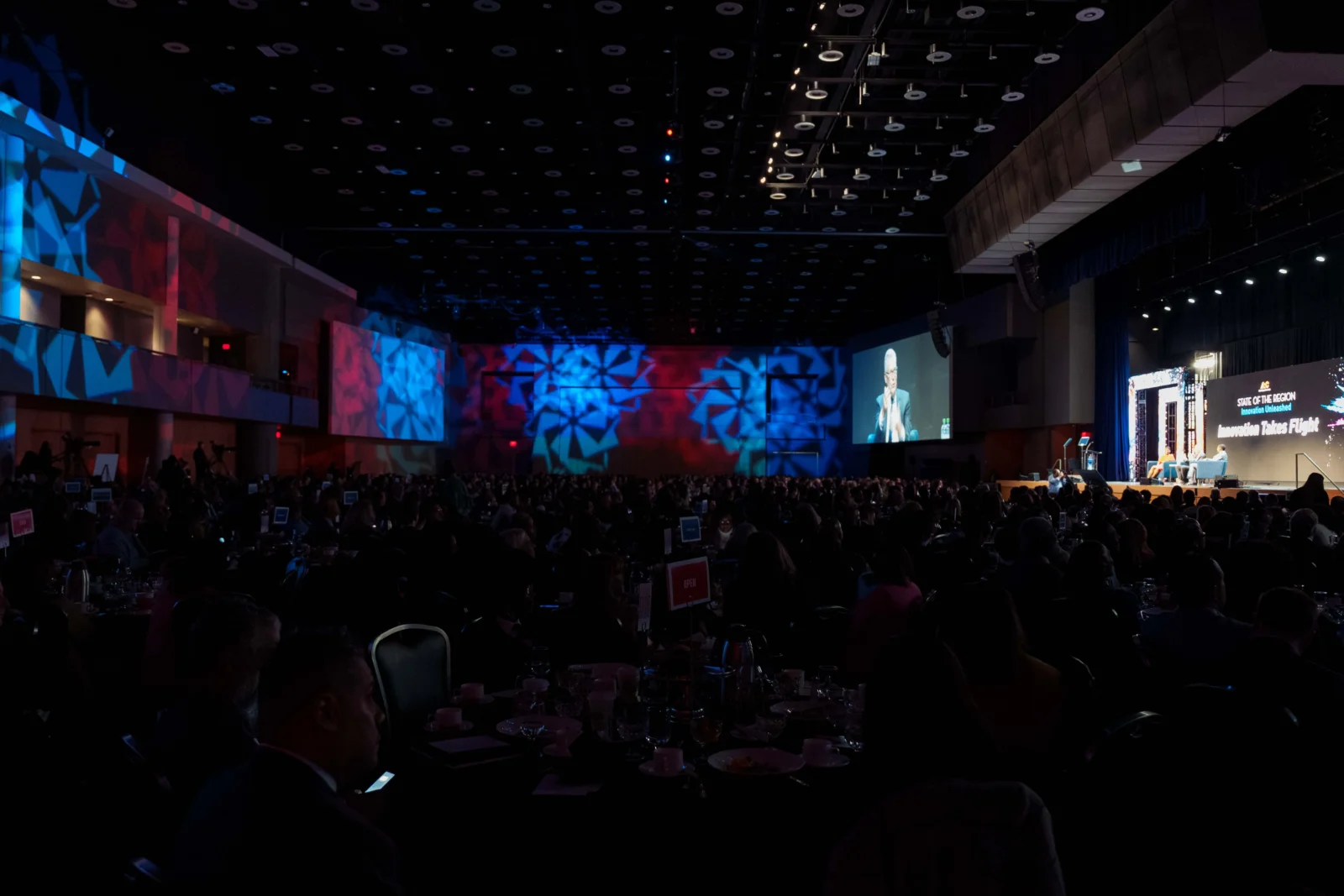
At the Atlanta Regional Commission’s State of the Region event, the objective was to create a high-visibility general session environment for civic and business leadership.
The production plan centered on three priorities:
- Clear sightlines across a large ballroom
- A visual system that reinforced the significance of the program
- Consistent audio coverage for keynote and panel content
To support this, the design incorporated a large-format LED video wall framed by custom-fabricated arch structures, along with a calibrated lighting system that balanced stage presence with room visibility.
This was not a design decision made on-site. It was developed in advance through layout planning, system integration, and coordination with the venue.
Because the technical environment was defined early, the on-site focus shifted from problem-solving to execution.
Managing Scale and Program Complexity
As events scale, the importance of structure increases.
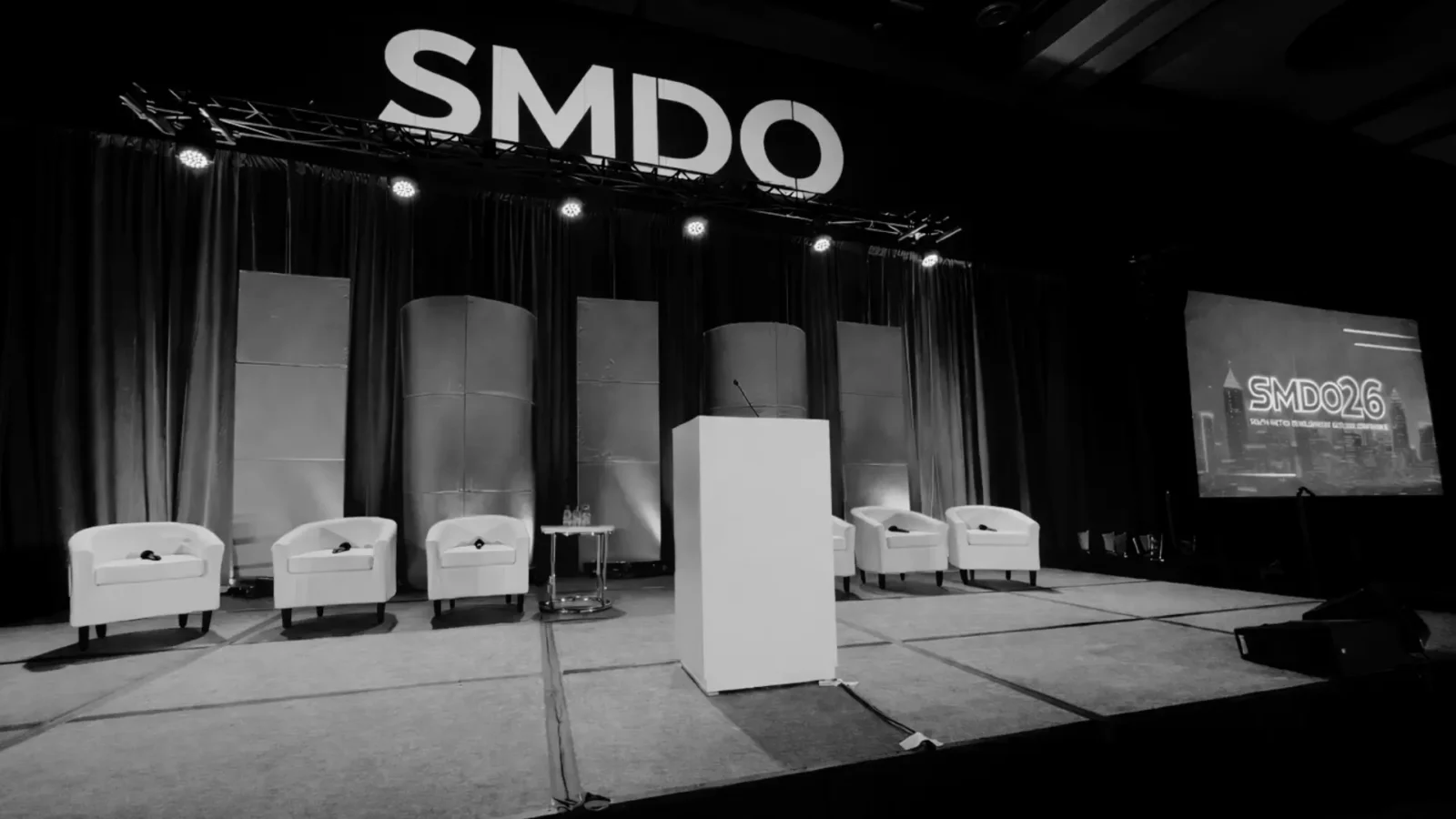
At the SMDO Outlook Conference, the program included:
- A morning executive general session
- A large-format lunch session within the same footprint
- A concurrent breakout room
- A tightly scheduled transition between segments
Rather than treating these as separate events, the production plan approached them as a single system with multiple phases.
This included:
- Reconfiguring projection layouts between sessions (two screens in the morning, three for the lunch program)
- Managing stage resets to accommodate different content formats
- Coordinating timing across rooms to prevent overlap and disruption
Without a defined structure, these transitions introduce risk. With a clear plan, they become controlled changes within a known system.
Integration Across Technical Systems
Audio, video, lighting, and staging are often discussed as separate services. In practice, they operate as a single environment.
A change in one area affects the others:
- Screen placement impacts sightlines and lighting angles
- Lighting levels affect camera exposure and audience visibility
- Audio system design influences speaker movement and stage layout
At a Synovus general session, for example, dual LED video walls were integrated across the width of the ballroom, paired with coordinated drape lighting and an extended stage platform.
This required alignment across all departments:
- Video for content distribution and scaling
- Lighting for stage visibility and brand alignment
- Audio for consistent coverage across a wide seating area
- Staging for speaker flow and positioning
Because the system was designed as a whole, the environment remained balanced and predictable throughout the program.
Planning for Variability
No event runs exactly as scheduled. Content shifts, speakers adjust timing, and conditions change.
A structured production plan accounts for this.
At the Piedmont Healthcare Luminaria Gala, the program included:
- Live and pre-produced content
- A fundraising component with real-time audience participation
- A live band following formal program segments
Each of these elements required different technical handling. The production plan incorporated:
- Flexible video routing for live feeds and auction visuals
- Audio calibration for both speech intelligibility and live music
- Lighting adjustments to transition from program to celebration
Because these variables were anticipated, the team was able to adapt without disrupting the audience experience. The event ultimately exceeded its fundraising goal, supported in part by a clear and engaging presentation environment.
The Role of Preparation and Infrastructure
Execution quality is also tied to how systems are prepared before they arrive on-site.
A structured approach includes:
- Pre-building and testing systems in a controlled environment
- Verifying signal flow, redundancy, and configuration
- Organizing equipment for efficient load-in and deployment
At Innovent, this often involves staging systems in advance through a centralized warehouse process, where equipment is allocated, assembled, and tested before delivery.
This reduces on-site uncertainty and allows the team to focus on installation and execution rather than troubleshooting.

Why This Matters to Event Teams
For planners and organizers, the value of a structured production plan is not just technical.
It changes how the entire event is experienced from a management standpoint.
Instead of reacting to issues, teams are able to:
- Focus on speakers and attendees
- Make informed decisions based on a known plan
- Maintain control over timing and program flow
The production environment becomes a support system rather than a variable.
Key Takeaway
Events that feel organized, clear, and well-paced are rarely defined by individual pieces of equipment or last-minute adjustments.
They are defined by the level of structure applied in advance.
A production plan that connects program goals, technical systems, and execution roles creates an environment where outcomes are predictable and performance is consistent.
That is what allows an event to run as intended.