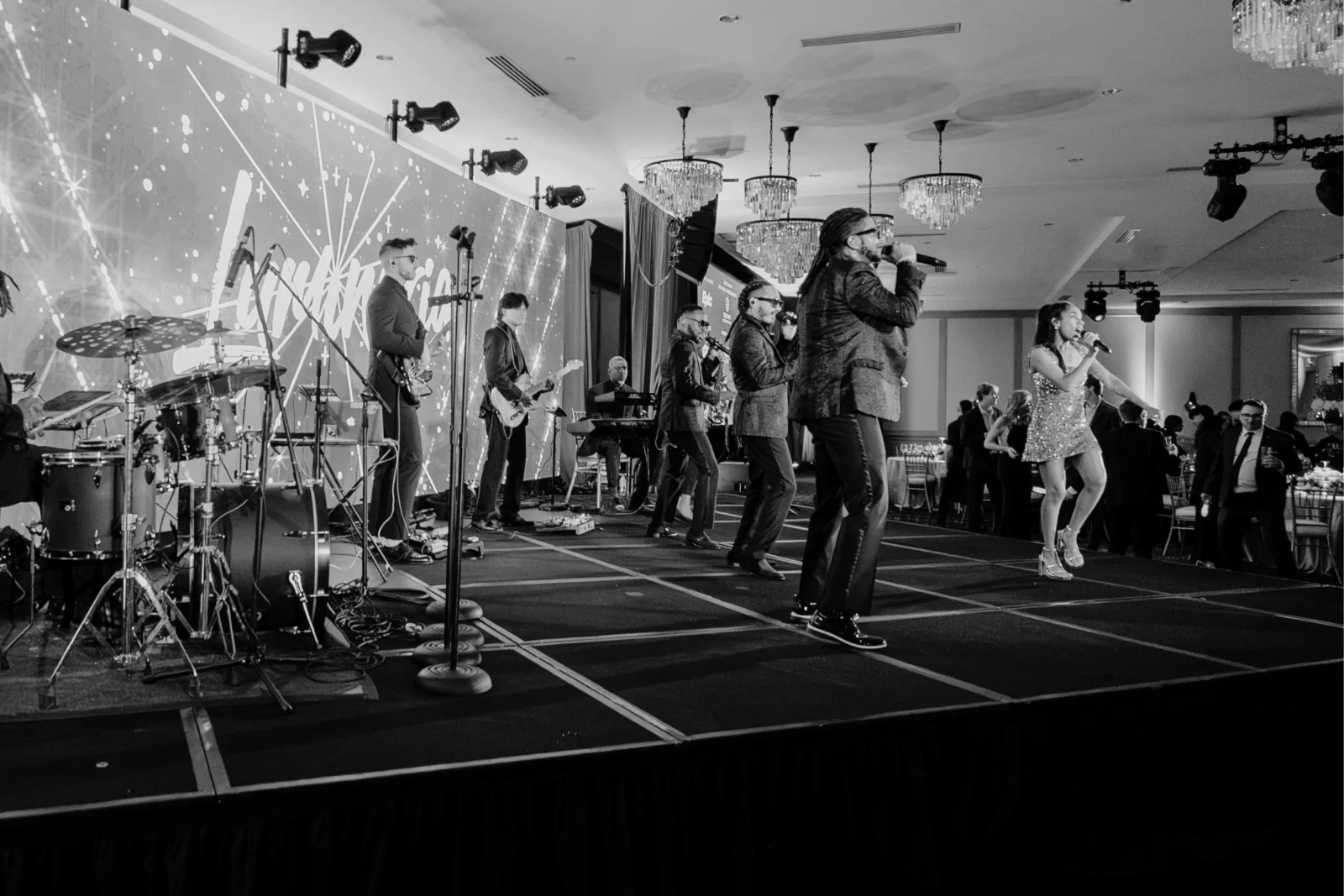
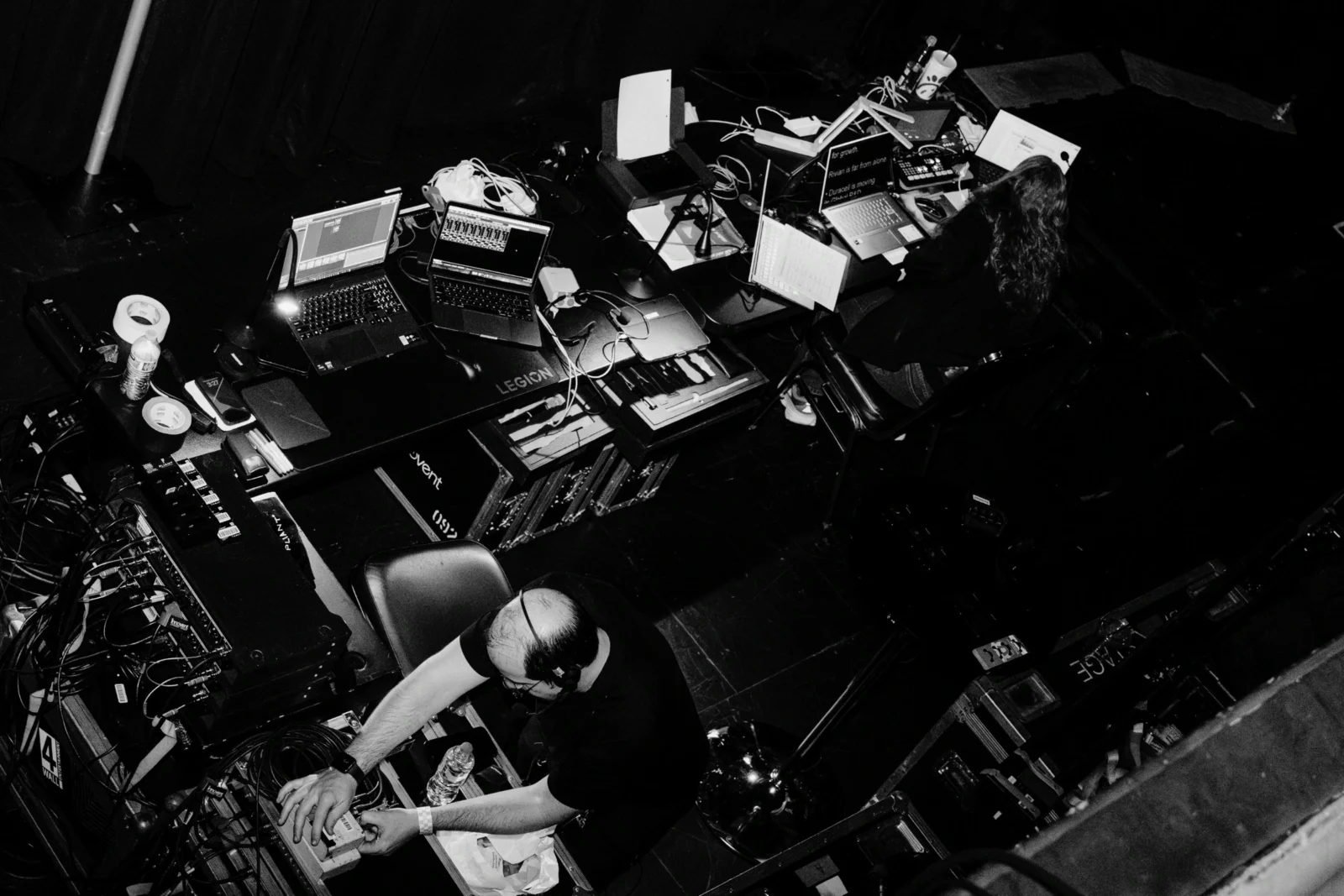
Recurring conferences offer a strong foundation for creative growth. Attendees already understand the event, recognize its traditions, and arrive with a clear sense of what the organization represents.
Each new year brings an opportunity to build on that familiarity. Thoughtful updates to the environment, program flow, content, and attendee experience can make the conference feel current while strengthening the identity people already value.
Here are 10 ways to bring fresh energy to a recurring conference.
1. Experience the Event Through the Attendee’s Eyes (Audit the Attendee Journey)
Review the conference from the attendee’s point of view, beginning with registration and ending with the final session. Look at how people move through the event, where information may be unclear, when energy begins to drop, and which moments consistently receive the strongest response.
Consider the agenda, session timing, room changes, registration flow, post-event surveys, show footage, room layouts, and production notes. Use that information to identify three experiences worth preserving, three areas to improve, and one moment with the potential to become more memorable.
This creates a focused starting point for deciding where time, budget, and creative attention will have the greatest impact.
What Your AV Partner Should Provide:
A review of prior show files, room layouts, production notes, and available event footage, followed by clear recommendations on where technical, visual, or operational changes could improve the attendee experience.
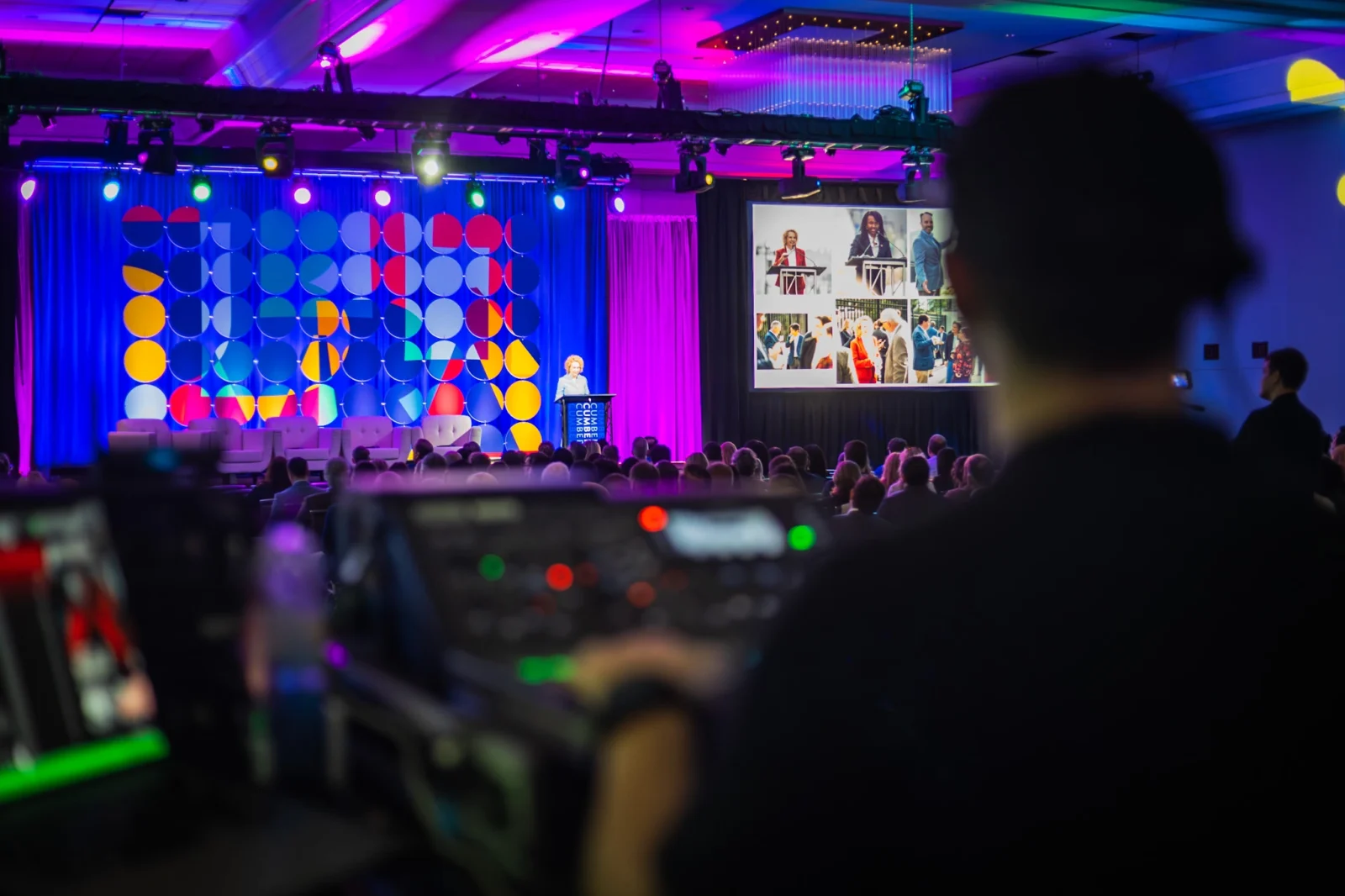
2. Build on the Traditions People Value
Established conferences often include signature moments that attendees look forward to each year. These traditions provide a natural starting point for creative development.
A familiar opening, awards presentation, keynote format, or networking experience can return with a new visual treatment, updated pacing, or stronger production support. The tradition remains recognizable while the presentation continues to evolve.
The format can then evolve without losing its purpose. An awards presentation may benefit from shorter walk-ups and prepared winner graphics. A familiar opening video can incorporate current member stories or milestones. A traditional keynote can become a moderated conversation while remaining in the same place on the agenda.
The goal is to strengthen the tradition rather than replace it simply for the sake of change.
What Your AV Partner Should Provide:
Creative and production options that preserve the purpose of established moments while improving their pacing, presentation, visual support, and overall impact.
3. Establish One Clear Creative Direction
Establish a creative direction before developing the stage, graphics, lighting, signage, or session content. It should align with the event goals, audience, theme, and budget while remaining simple enough to explain in one sentence.
The direction might be a modern interpretation of the organization’s history, an experience centered on connection and momentum, or a visual approach inspired by the host city.
Once the direction is established, define the colors, imagery, scenic shapes, typography, and motion style that support it. This gives every contributor a shared point of reference and helps prevent the event from becoming a collection of unrelated elements.
What Your AV Partner Should Provide:
A coordinated visual and production approach that translates the conference direction across staging, screens, lighting, graphics, and show flow.
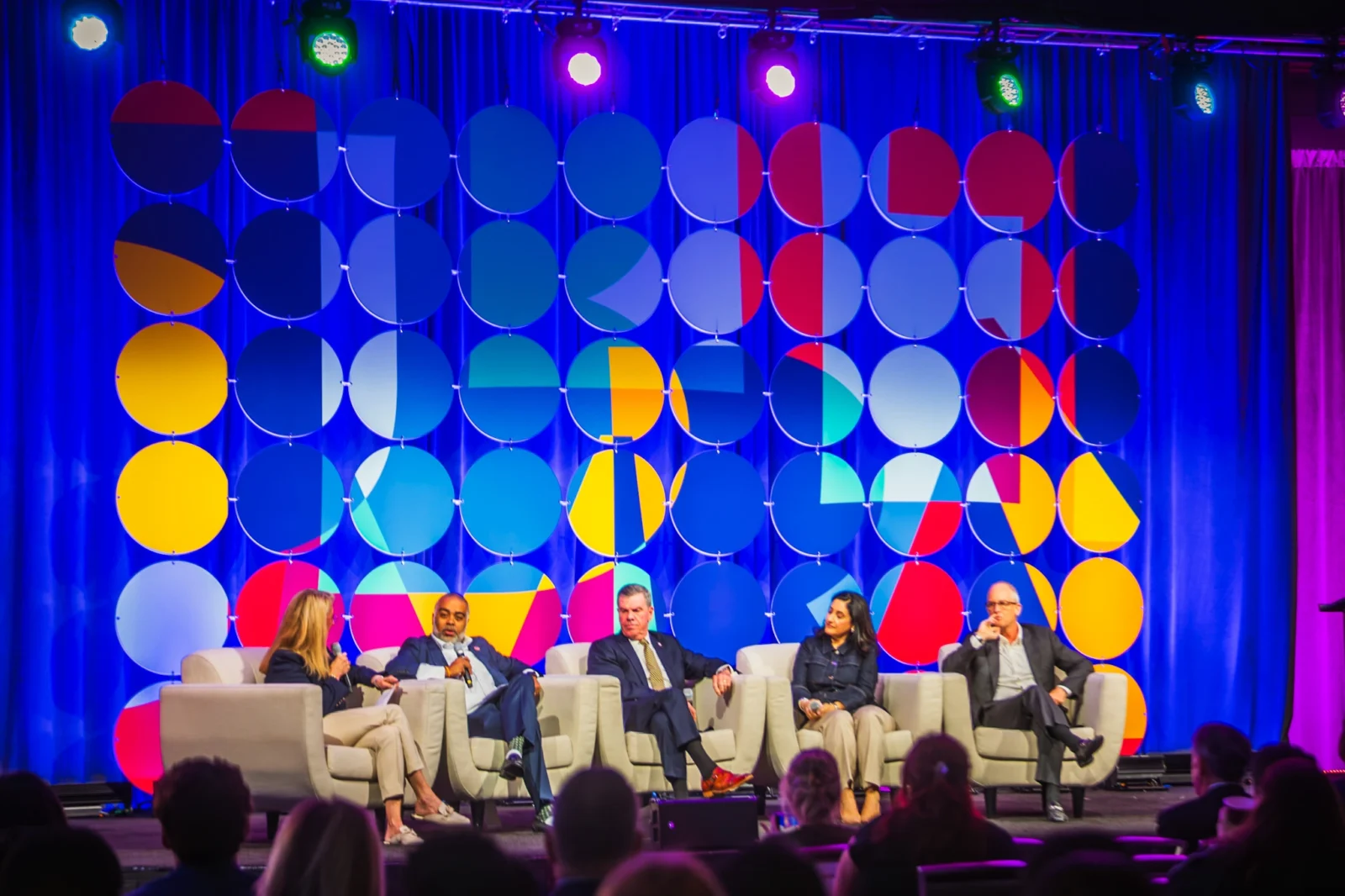
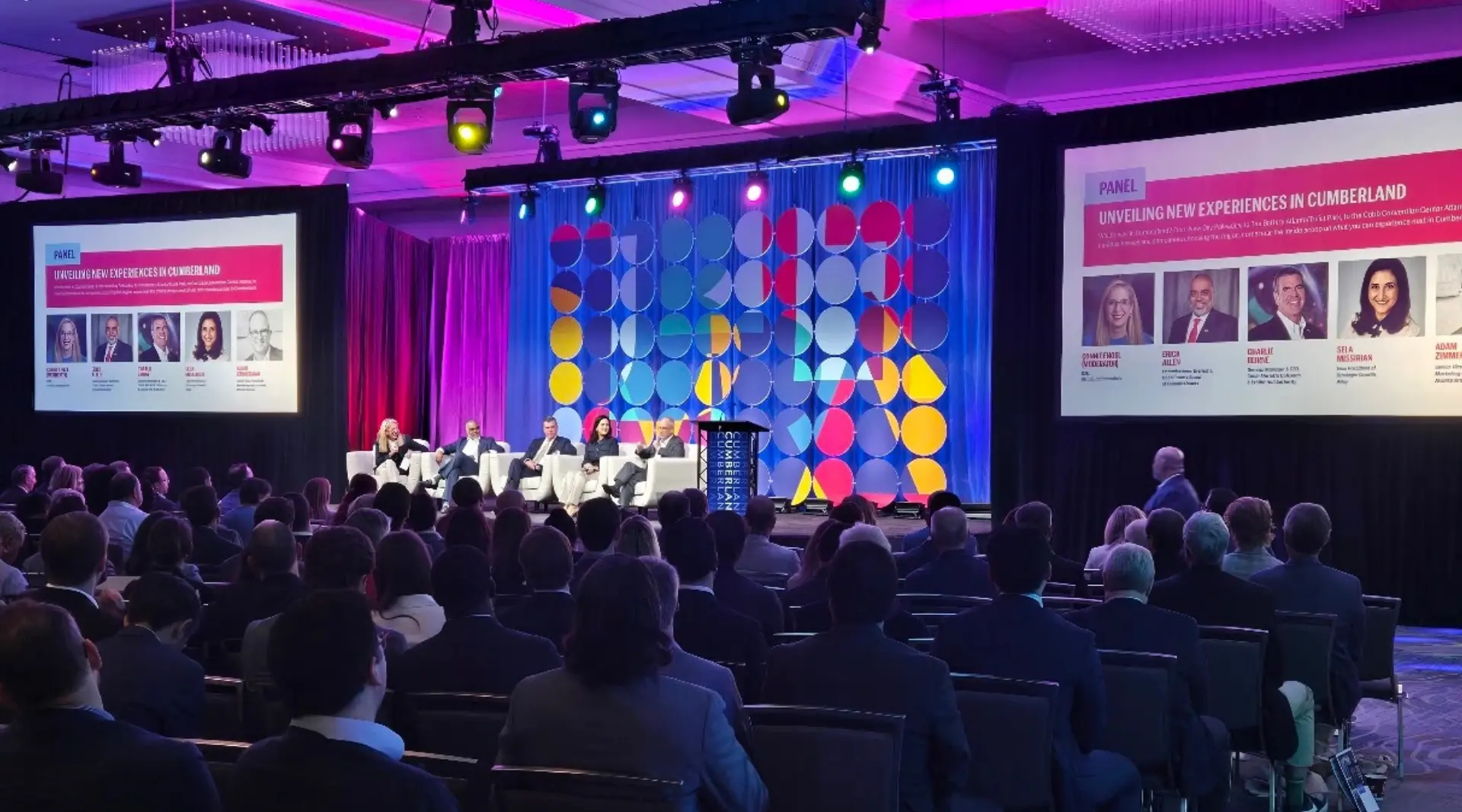
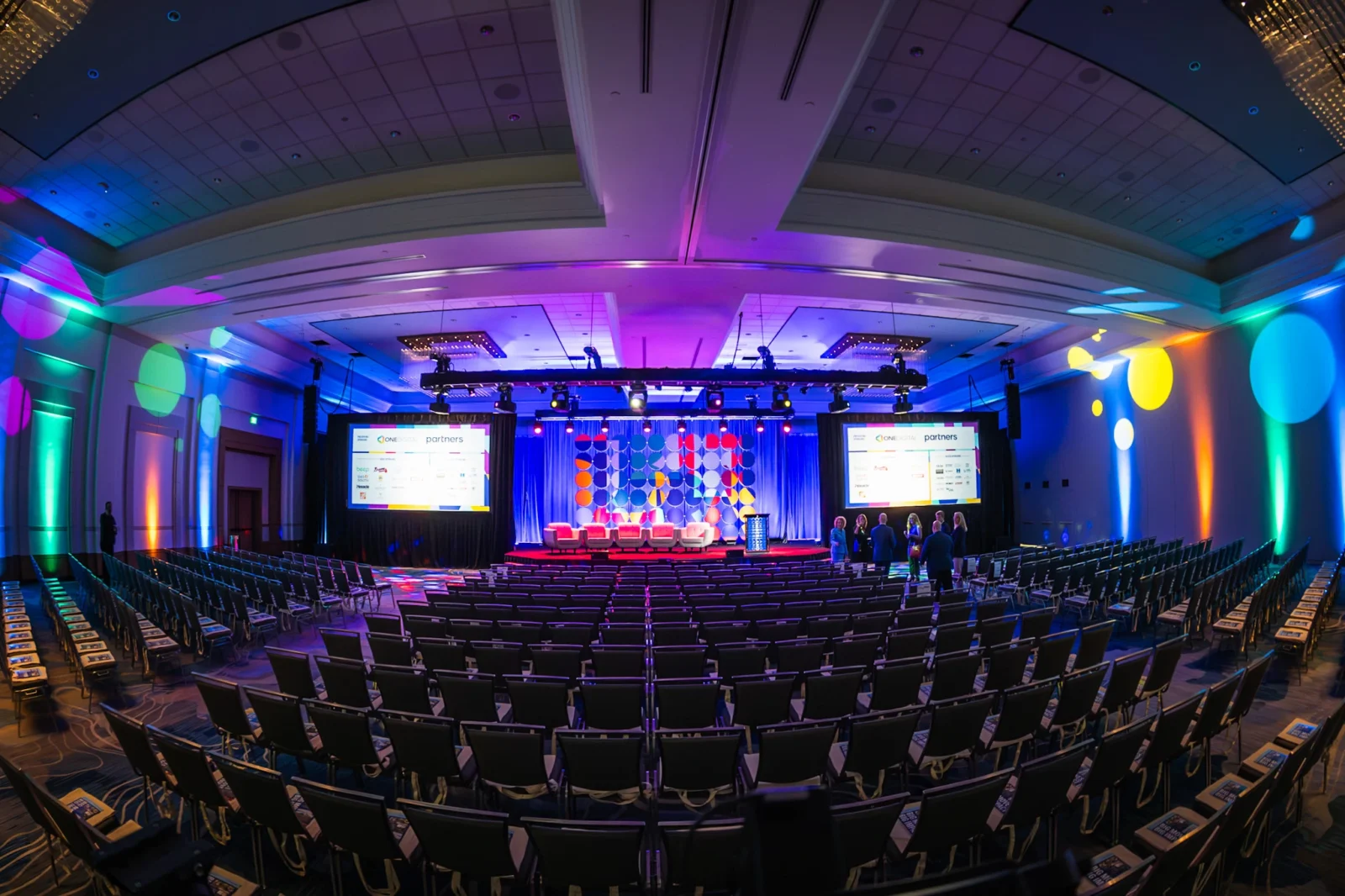
4. Design Screens Around Content and Sightlines
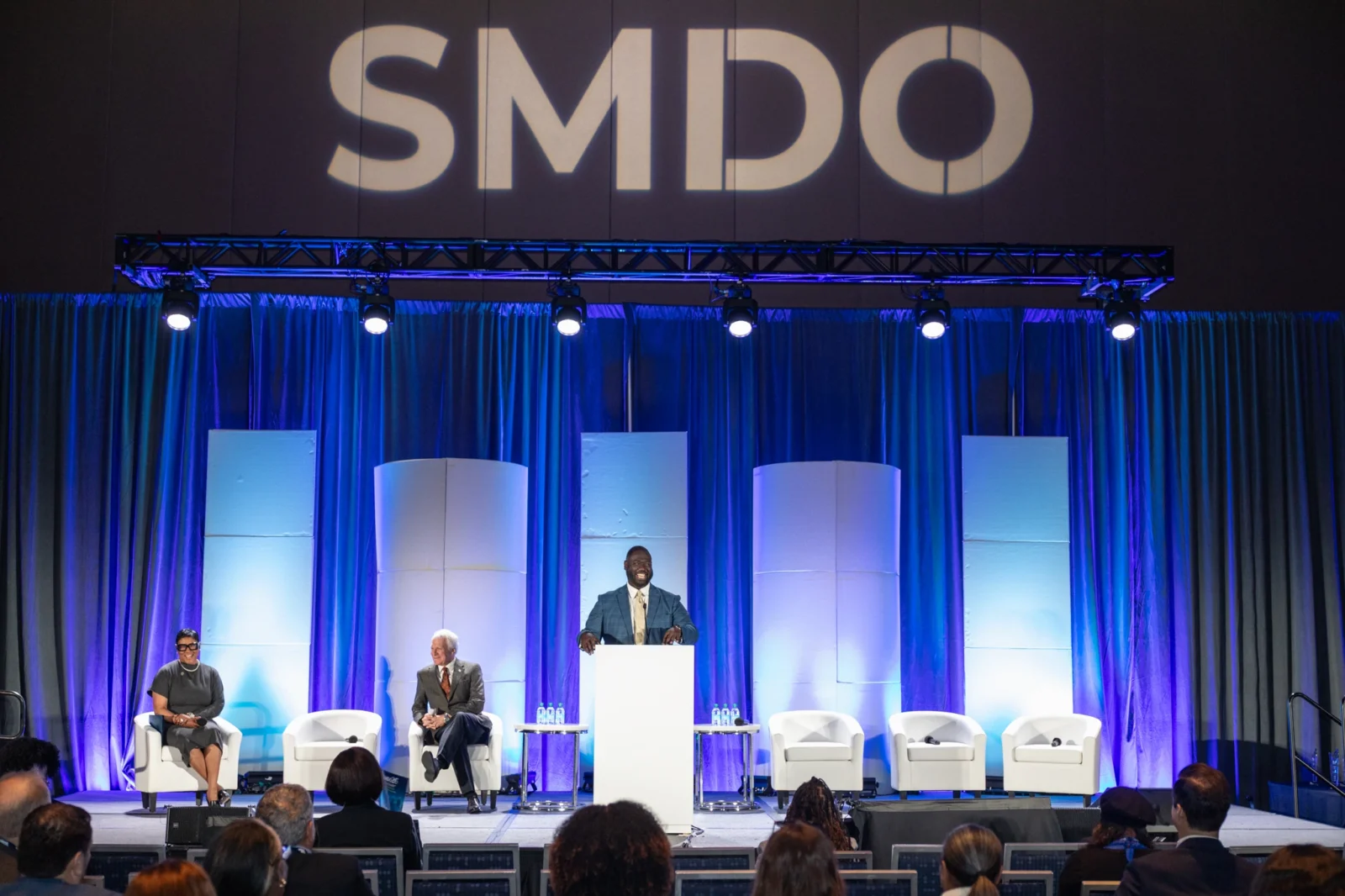
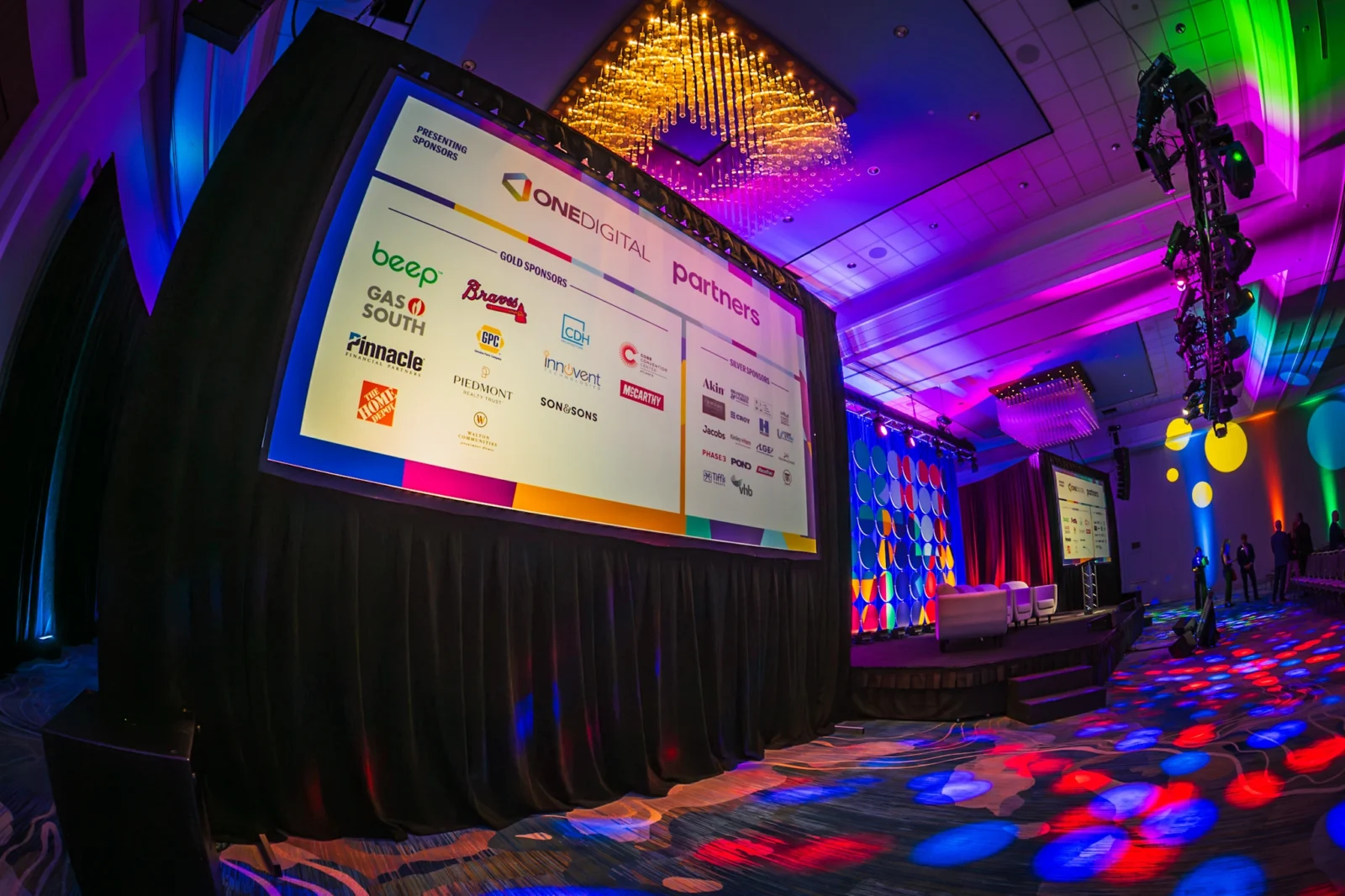
Screen design should begin with what the audience needs to see and how the program will be presented. Consider the room width, audience depth, ceiling height, camera positions, presentation formats, sponsor requirements, and whether image magnification will be used.
A wide central canvas may support immersive graphics and keynote content, while side screens may be more effective for camera images and presentation support. Portrait displays can carry agendas, speaker identification, or sponsor content.
Determining the function of each screen first leads to a configuration that supports both the content and the physical environment.
What Your AV Partner Should Provide:
A screen plan based on room dimensions, audience sightlines, camera needs, presentation formats, rigging conditions, and the way each display will be used during the program.
5. Build a Complete Conference Content Package
Presentation slides are only one part of the content attendees see throughout the conference. A complete package may also include:
- Walk-in and break loops
- Speaker title cards and panel layouts
- Sponsor and awards graphics
- Holding slides and countdown timers
- Session openers and transition animations
Create a content list that identifies the owner, dimensions, deadline, approval process, and playback location for each asset. It should also clarify who is responsible for collecting speaker, sponsor, and organizational content and when each round of review will take place.
This helps coordinate speakers, sponsors, designers, internal teams, and production partners while reducing last-minute gaps. It also ensures that the time before and between sessions feels connected to the conference rather than treated as an afterthought.
What Your AV Partner Should Provide:
A clear content requirements list with screen dimensions, file specifications, deadlines, review milestones, playback locations, and responsibility for each visual asset used throughout the conference.
6. Introduce More Variety Into the Program (Match Session Formats to the Content)
Different types of content benefit from different presentation formats. A keynote works well for a strong point of view, while an interview may be better suited to personal experience or leadership insight. Panels are useful when multiple perspectives are needed, and demonstrations are more effective when the audience needs to see a process in action.
Session objectives, speaker comfort, audience size, and the amount of interaction required should all influence the format. Review the agenda for long stretches of identical presentations. Several consecutive podium sessions may contain valuable information but still create a repetitive experience.
Changing one session to a moderated conversation, short-form presentation series, audience Q&A, or demonstration can improve the pace while helping the content land more effectively.
What Your AV Partner Should Provide:
Technical and staging recommendations for each session format, including microphone needs, furniture layouts, screen content, camera coverage, and audience interaction. These details should be included in CAD drawings.
Read more about the Innovent Technologies production team.
7. Plan Every Transition in the Run of Show
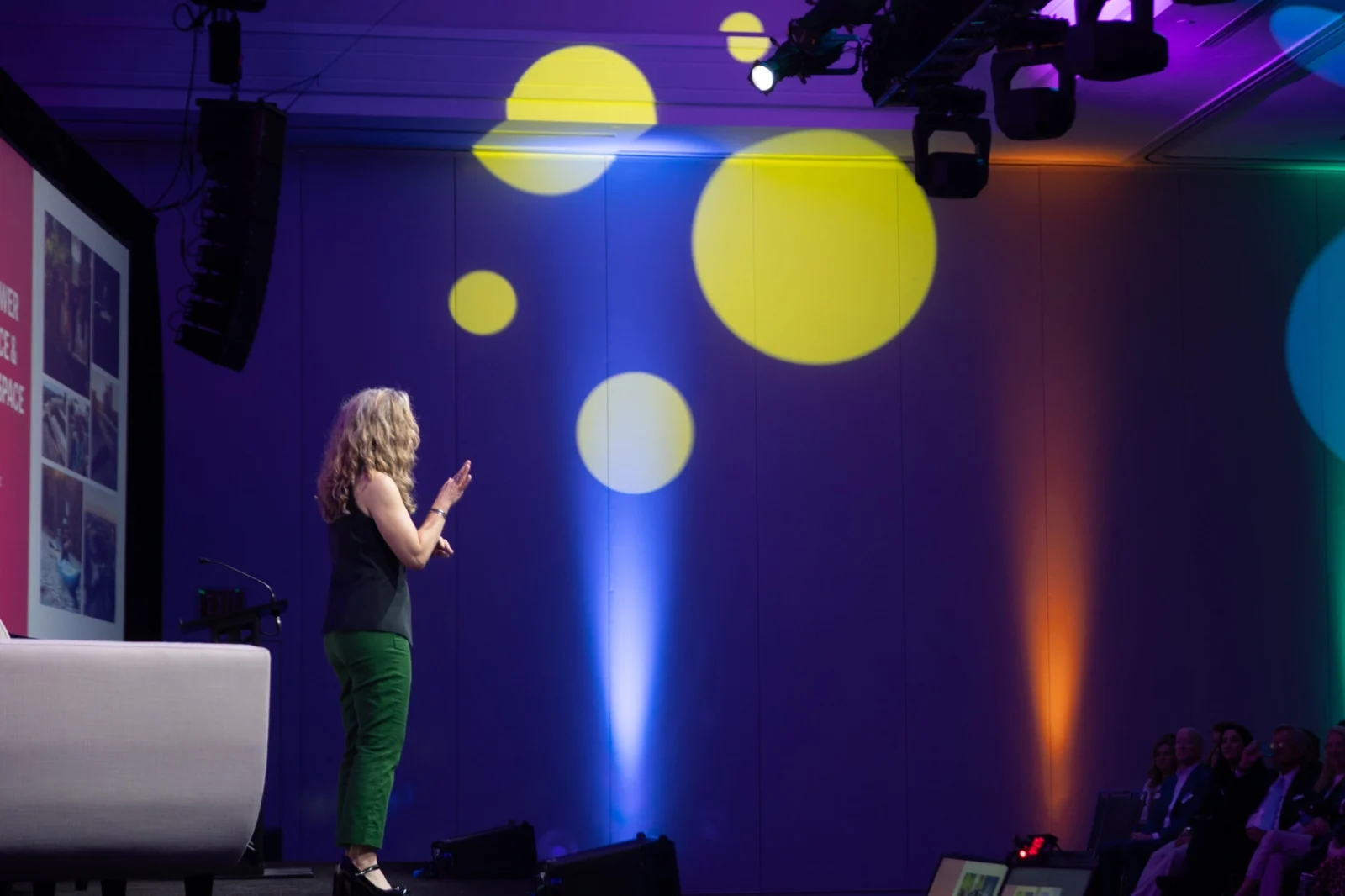
Music, lighting, motion graphics, moderator remarks, and coordinated speaker movement can guide the audience smoothly from one segment to the next. These moments also create space to shift the tone between a keynote, panel, awards presentation, or major announcement.
Transitions should be planned as carefully as the sessions themselves. Each one may involve closing remarks, speaker movement, music, lighting changes, screen content, microphone changes, and furniture resets.
For every transition, confirm:
- Who closes and introduces each segment
- Where speakers enter and exit
- What appears on screen
- When music and lighting change
- Who handles furniture or equipment movement
The time required for these changes should be reflected in the agenda rather than treated as an instant handoff between sessions. These details should also be documented in the run of show and confirmed during rehearsal.
A well-planned transition keeps the audience engaged while giving the production team enough time to prepare the next segment.
What Your AV Partner Should Provide:
A detailed run of show that identifies cues, speaker movement, screen changes, lighting shifts, music, microphone handoffs, stage resets, and the time required for each transition.
8. Extend the Creative Direction Across the Venue
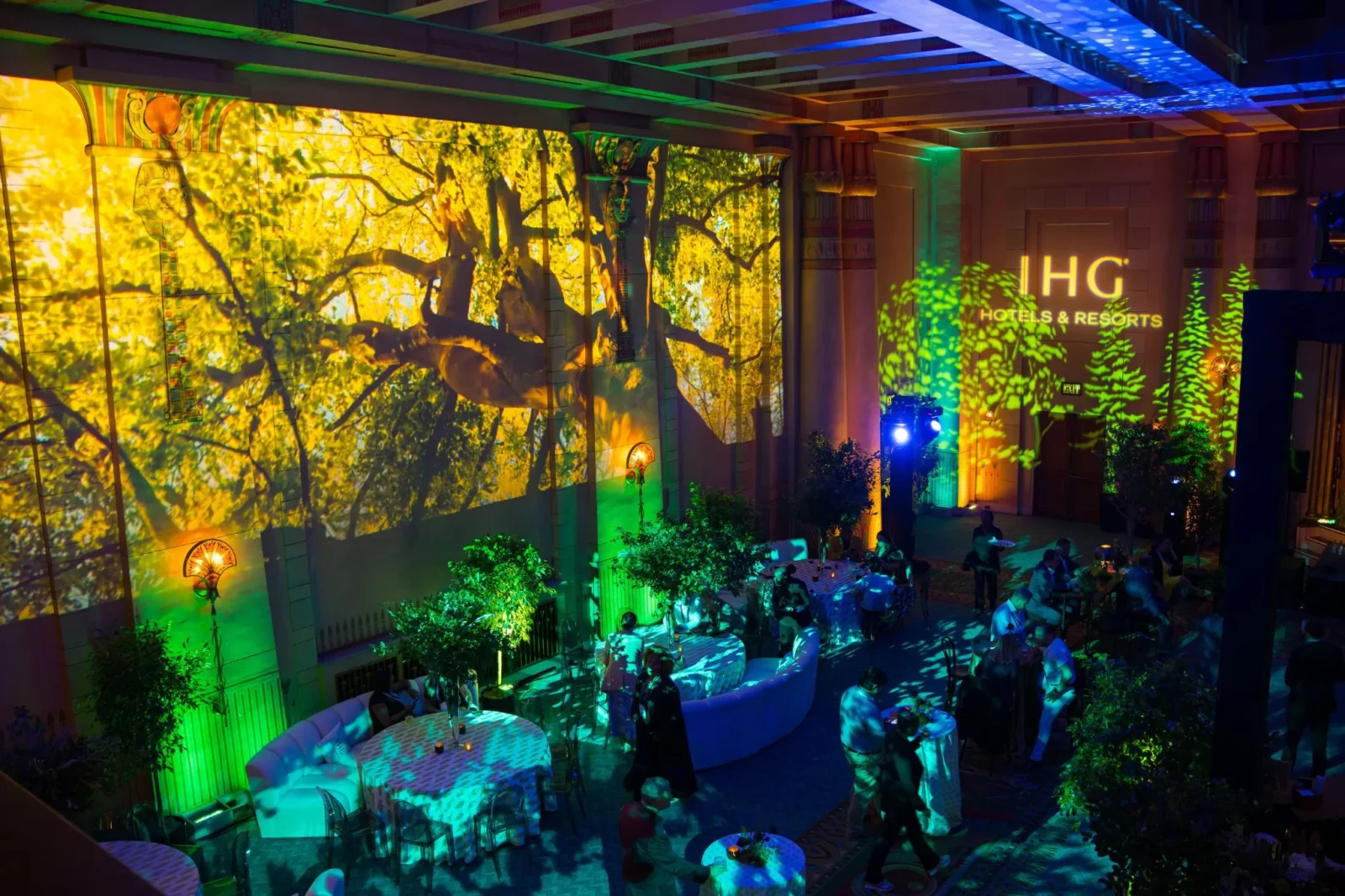
The conference experience extends beyond the general session. Registration, corridors, breakout rooms, sponsor areas, networking spaces, and evening functions should feel connected to the same event.
This does not require a major installation in every location. Continuity can come from a few repeated elements, such as typography, motion graphics, lighting colors, digital signage, scenic shapes, or branded audio cues.
Begin by identifying the highest-traffic and highest-priority attendee touchpoints. Then decide where the creative direction will have the greatest effect within the available budget. The goal is not to duplicate the main stage throughout the venue, but to create enough consistency that every area feels like part of the same conference.
What Your AV Partner Should Provide:
A practical plan for extending the visual direction into priority spaces through digital signage, lighting, content, audio, scenic elements, and coordinated technical execution.
Read more about Breakout Room AV Planning for Multi-Track Conferences
9. Give Existing Elements a New Role
Review which scenic pieces, screens, furniture, signage structures, graphics, videos, and branded assets can be used differently before developing an entirely new package.
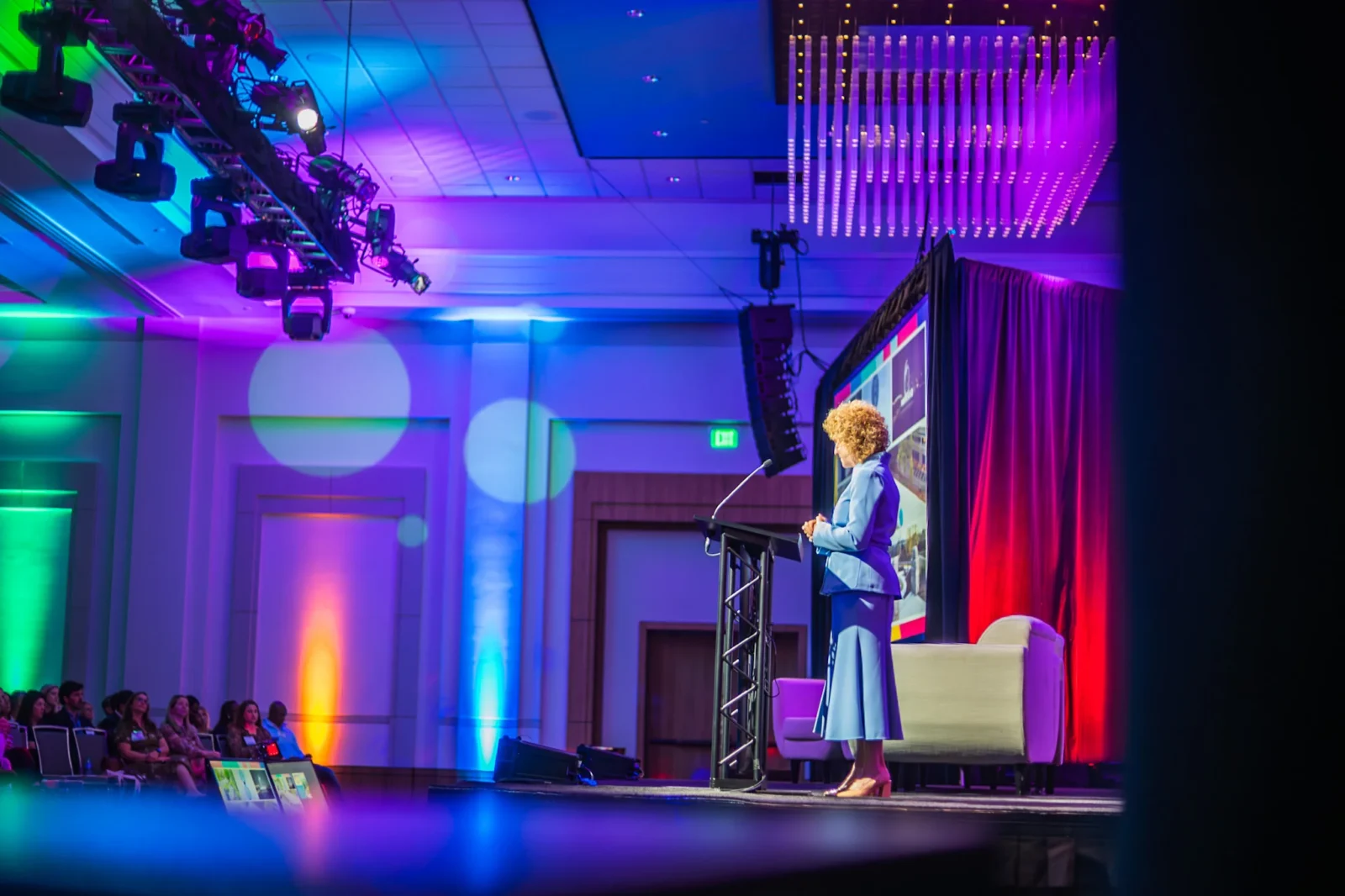
Scenic panels may be rearranged to create a new stage shape. Existing screens may support a revised content layout. Branded elements can move from the stage to registration, while furniture can shift between panels, interviews, and evening programs. Lighting fixtures can create a different look through new placement, programming, and cueing.
Reconfiguration can produce a noticeably different experience while making better use of prior investments and the current production budget.
Creative adaptation allows the event to build on previous investments while presenting them in a new way.
What Your AV Partner Should Provide:
An inventory-based review of existing scenic, video, lighting, furniture, and content assets, along with recommendations for how they can be rearranged, reprogrammed, or adapted.
10. Design One Signature Moment Around a Clear Outcome
Choose one point in the conference where the content, production, and audience experience come together around a specific program objective. It may be designed to open the event, recognize achievement, launch an initiative, introduce a major announcement, or close the conference with a clear takeaway.
Begin by deciding what attendees should feel, understand, remember, or do at that moment.
The signature moment may be an opening built around member voices, a major announcement supported by coordinated lighting and screen content, or a recognition sequence that involves the audience. It could also be a stage transformation or a closing recap created from footage captured during the conference.
The moment does not need to be the largest or most expensive part of the event. Its impact comes from a clear purpose, thoughtful timing, and strong coordination between the message and its presentation.
What Your AV Partner Should Provide:
A fully developed production plan that connects the program objective, message, timing, content, lighting, audio, staging, rehearsals, and technical cues needed to deliver the moment successfully.
View the Custom Designed LED Entrance Portal that we produced for ARC State of the Region Breakfast .
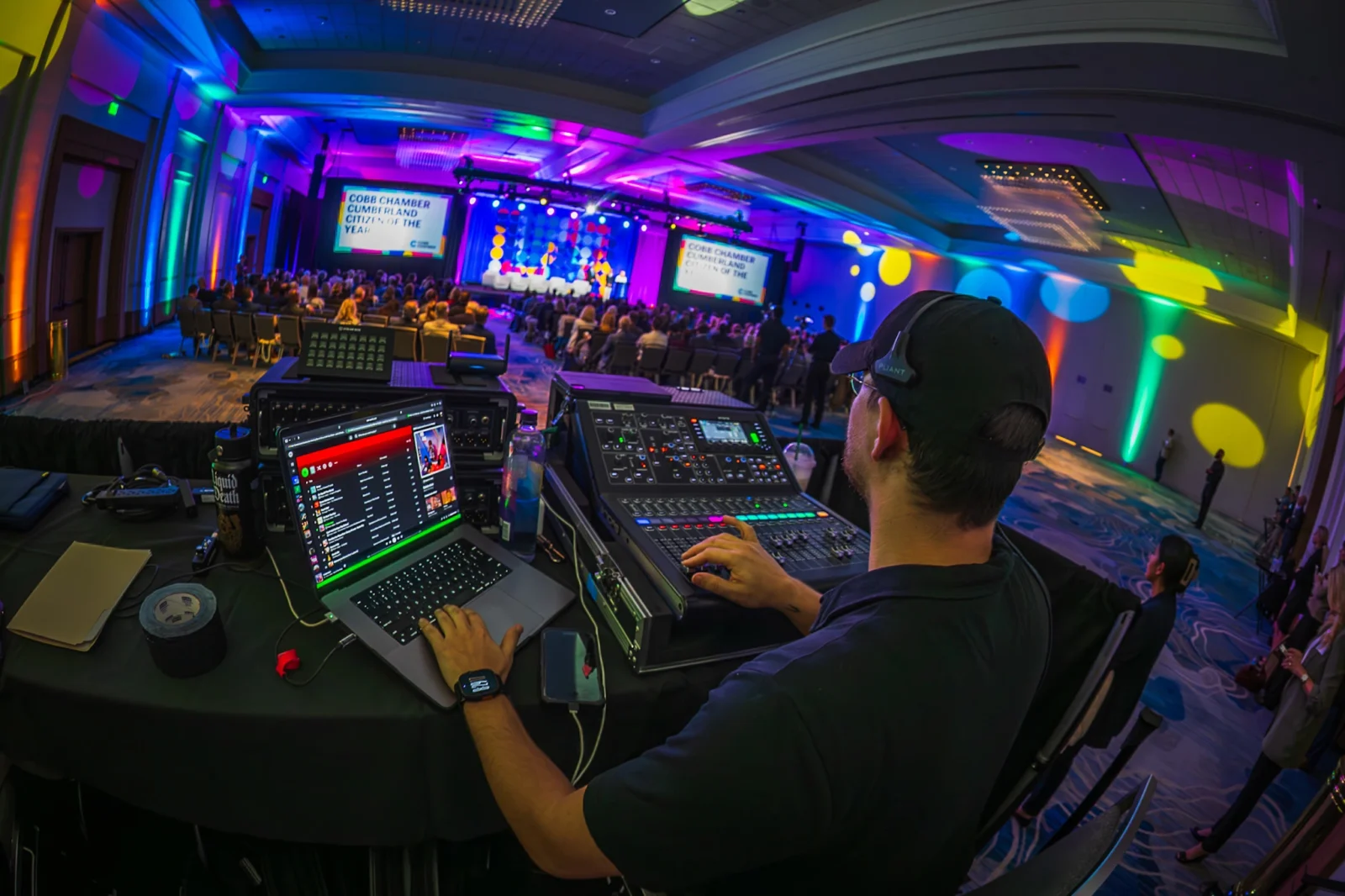
Key Takeaway: Refresh with Purpose
A recurring conference does not need to be completely reinvented to feel new. The strongest updates begin by identifying what attendees already value, where the experience can improve, and which moments deserve greater attention.
From there, creative direction, content, staging, screens, transitions, and venue-wide branding can work together as part of one plan. A capable AV partner should help translate those goals into practical recommendations, clear responsibilities, and a production approach that fits the program and budget.
When each decision supports a defined outcome, the conference can evolve from year to year while remaining recognizable, relevant, and true to the event people return for.