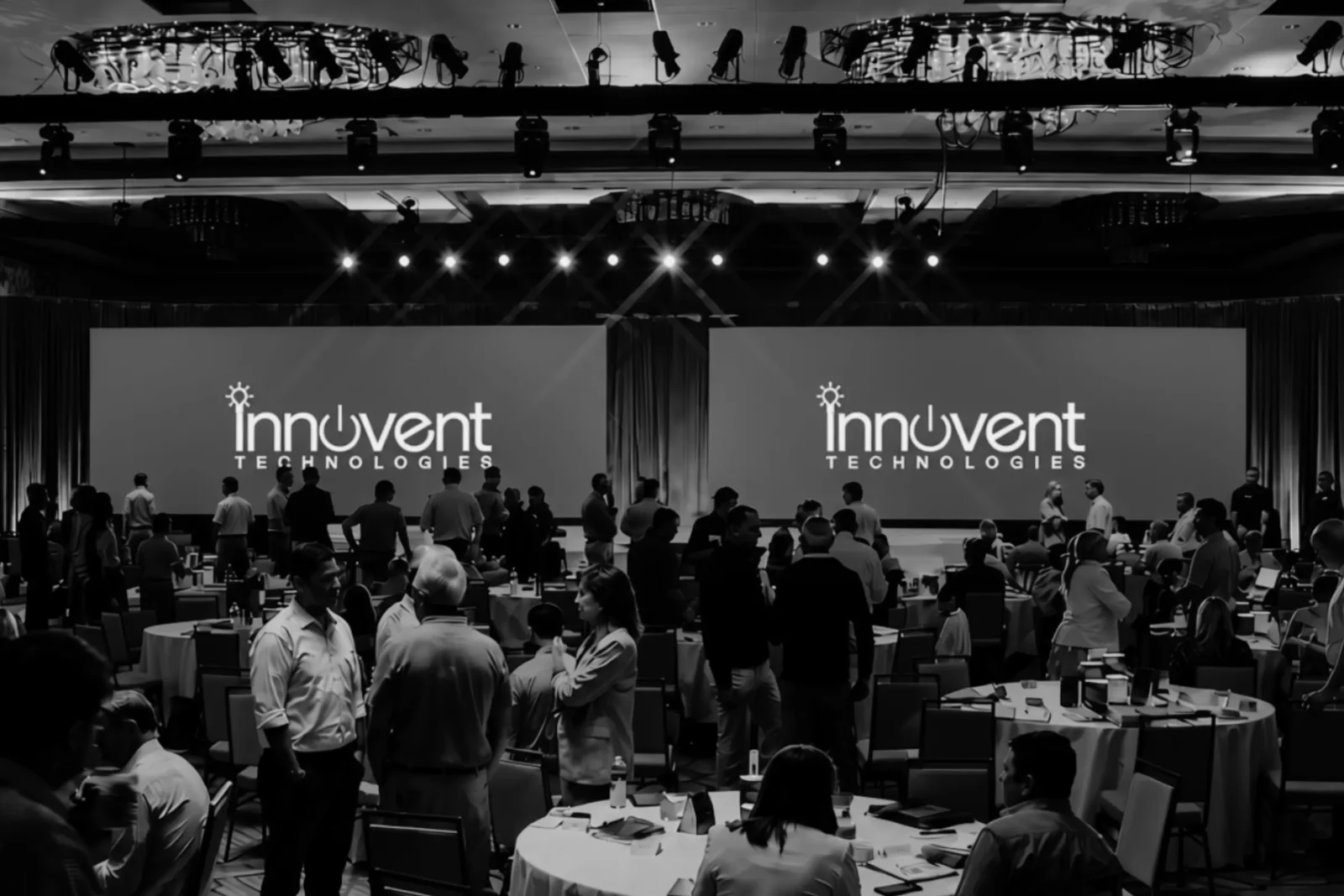
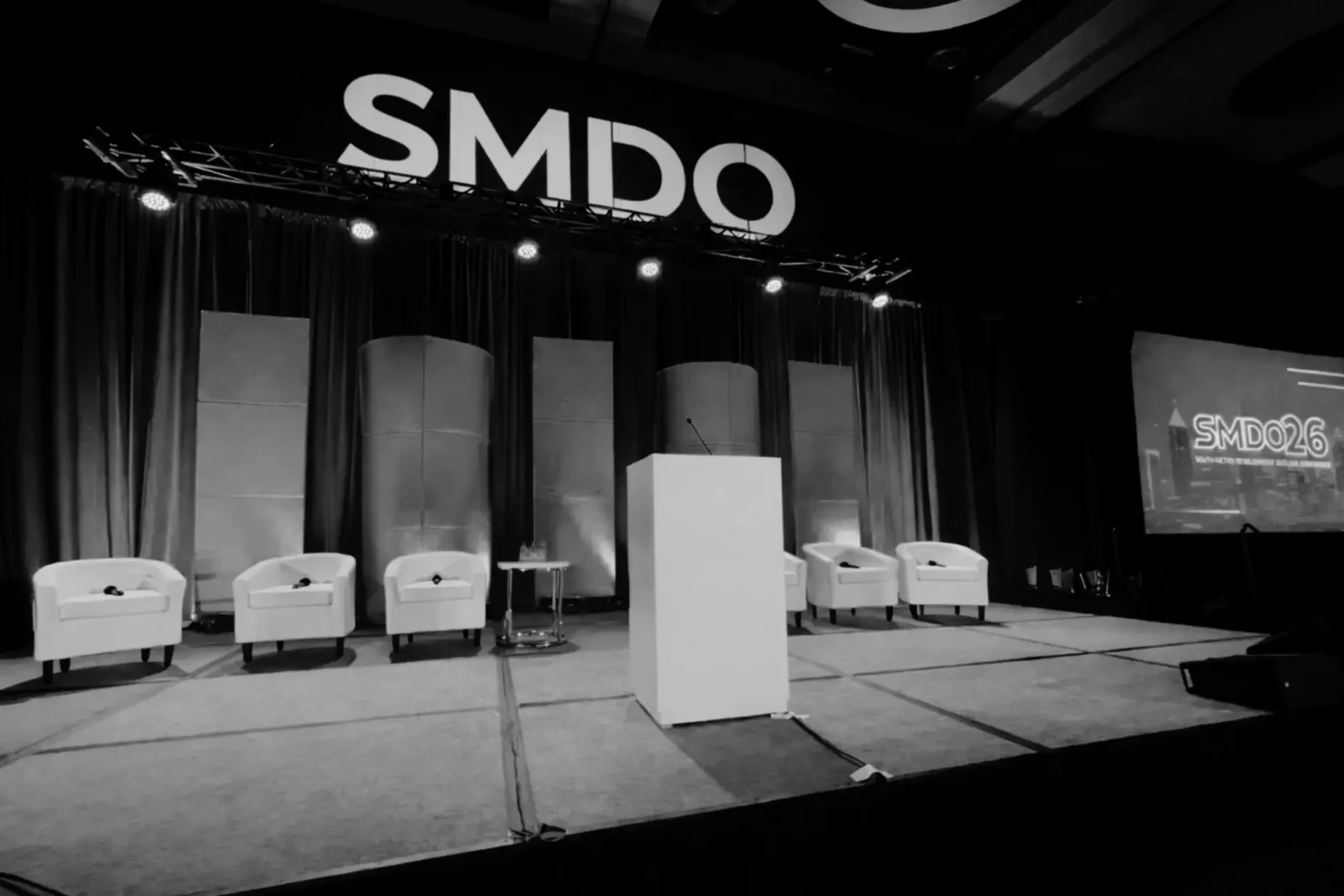
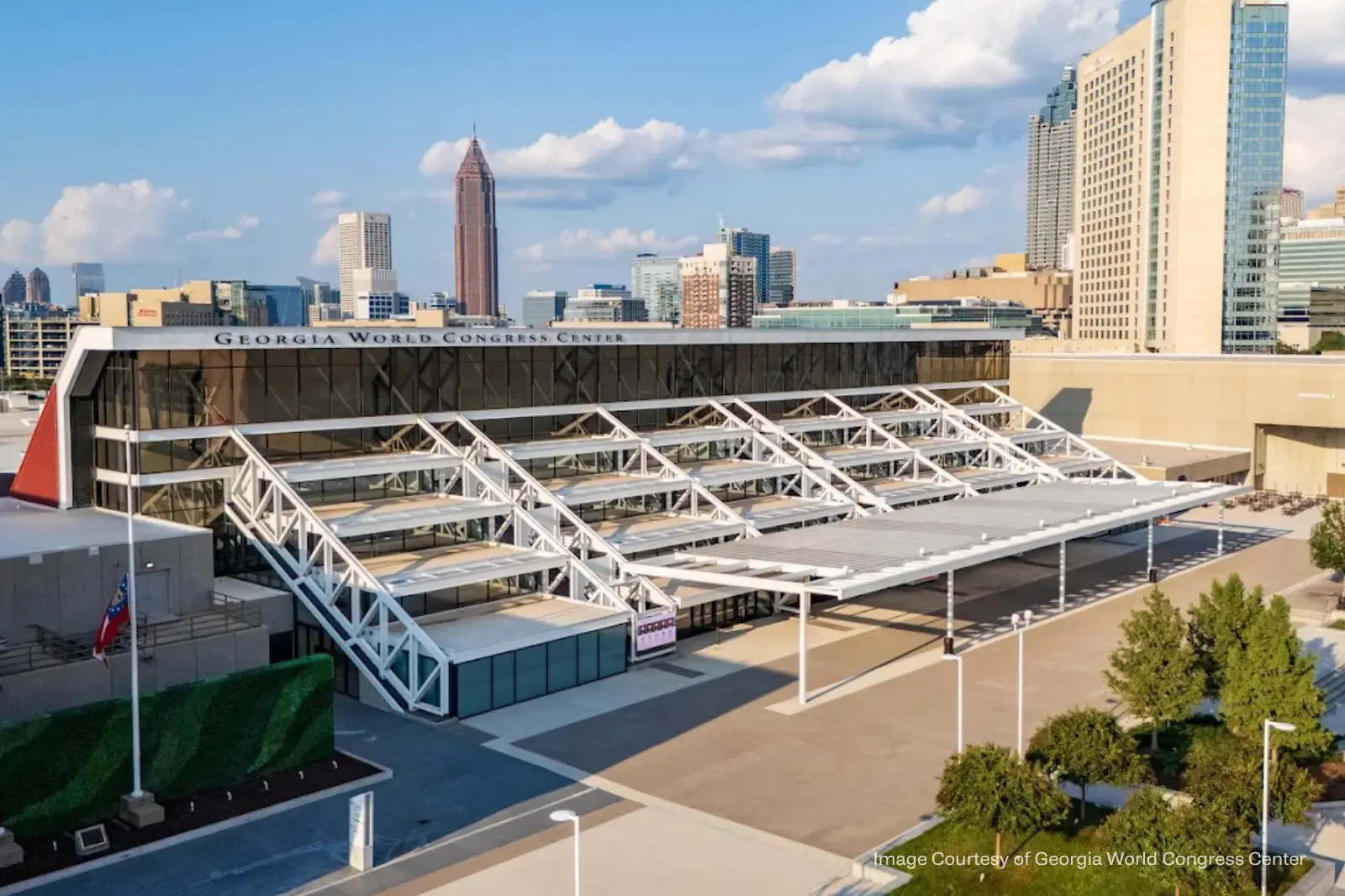
The Georgia World Congress Center in Atlanta, Georgia is one of the largest and most operationally complex convention environments in the United States. With multiple interconnected buildings, expansive exhibit halls, ballrooms, meeting room networks, loading docks, and direct connectivity to Atlanta’s downtown convention district, successful AV production at GWCC depends heavily on planning, coordination, and execution long before attendees arrive onsite.
For event organizers, association teams, agencies, and corporate planners, understanding how AV production functions within an environment of this scale can make a significant difference in the overall attendee experience and the smooth execution of a program.
At Innovent Technologies, our team supports conferences, corporate meetings, and multi-day programs throughout Atlanta and nationwide. We regularly work within Atlanta's large-scale convention ecosystems that require coordination across general sessions, breakout rooms, exhibit halls, staging, lighting, audio systems, presentation support, and show operations.
Download the Georgia World Congress Center Floor Plan Booklet
Understanding the Scale of the Georgia World Congress Center
The Georgia World Congress Center spans more than 4.1 million square feet with approximately 1.5 million square feet of flexible event space, 98 meeting rooms, multiple ballrooms, exhibit halls, auditoriums, and 72 loading docks.
From an AV production standpoint, this scale matters.
Many conferences hosted at GWCC are not limited to a single ballroom or exhibit hall. Instead, they operate as full event ecosystems involving:
- General sessions
- Concurrent breakout programs
- Registration areas
- Exhibit floors
- Networking receptions
- Sponsor activations
- Executive meetings
- Outdoor or connected venue environments
As programs expand across Buildings A, B, and C, production coordination becomes increasingly important. Teams must account for attendee flow, labor schedules, dock access, equipment distribution, power requirements, rehearsal timing, and communication between multiple production environments occurring simultaneously.
This is where structured production planning becomes essential.
Why Early AV Planning Matters at GWCC
One of the most common misconceptions about conference AV is that production begins during load-in. In reality, most successful programs begin weeks or months in advance through planning, CAD development, scheduling, and coordination.
At GWCC, this is especially important because the venue contains:
- Large exhibit halls with extensive floor plans
- Ballroom environments with varying ceiling heights and rigging considerations
- Multiple levels connected by concourses and corridors
- Shared loading dock systems
- Simultaneous citywide events occurring throughout the facility
The earlier production teams are involved, the more effectively they can help coordinate:
- Scenic layouts
- Screen positioning
- Lighting coverage
- Audio distribution
- Presentation flow
- Camera placement
- Internet and show control integration
- Labor scheduling
- Equipment staging
Our team frequently develops event layouts and technical planning documentation before production begins onsite. You can learn more about our approach to structured AV coordination and system planning through our Services and Technology pages.
Coordinating General Sessions and Breakout Rooms
One of the defining characteristics of conferences at GWCC is the need to support multiple event environments simultaneously.
A conference may feature:
- A large keynote session in a ballroom
- Dozens of breakout sessions throughout meeting rooms
- Sponsor presentations on the exhibit floor
- Registration operations in a concourse
- Networking events later in the evening
While attendees experience these environments independently, production teams must coordinate them as a single operational system.
This includes:
- Consistent presentation workflows
- Audio coordination between nearby spaces
- Shared show schedules
- Speaker support logistics
- Technical staffing coverage
- Equipment redundancy planning
- Communication between production teams
Because meeting rooms and exhibit halls can span significant distances within the facility, logistics and timing become critical. Even moving equipment or repositioning technical crews between rooms requires structured planning.
This is one of the reasons many large conferences rely on experienced production partners rather than approaching each room individually.
Load-In and Venue Logistics
The Georgia World Congress Center contains extensive loading dock infrastructure and exhibit access points, including drive-on exhibit halls and multiple freight access locations.
From a production perspective, this allows large-scale staging, LED systems, scenic builds, and technical equipment to move efficiently into the venue when coordinated correctly.
However, successful load-ins still depend on:
- Scheduled dock timing
- Equipment sequencing
- Labor coordination
- Freight movement planning
- Clear room turnover schedules
- Access to freight elevators and staging areas
This becomes even more important during citywide events when multiple conferences may be loading in or striking simultaneously across the facility.
Operationally, AV production at GWCC is often less about individual pieces of equipment and more about timing, coordination, and communication between departments.
Scenic, Lighting, and Presentation Design
Modern conferences at GWCC increasingly prioritize presentation quality and attendee experience alongside technical reliability.
Depending on the event structure, production may involve:
- Scenic stage builds
- LED walls
- IMAG camera systems
- Multi-screen presentations
- Decorative and architectural lighting
- Branded stage environments
- Livestreaming and recording support
- Hybrid event infrastructure
Ballrooms such as the Thomas B. Murphy Ballroom and the Georgia Ballroom provide flexible environments capable of supporting large keynote productions and multi-camera presentations.
The production approach for these spaces often changes significantly depending on:
- Audience size
- Stage orientation
- Session format
- Sightline requirements
- Sponsor visibility
- Camera needs
- Lighting goals
- Budget priorities
Because of this, production systems should be tailored to the event itself rather than treated as generic equipment packages.
Featured Production Experience at GWCC
Our team at Innovent Technologies has supported productions at the Georgia World Congress Center across a variety of event formats and audience sizes.
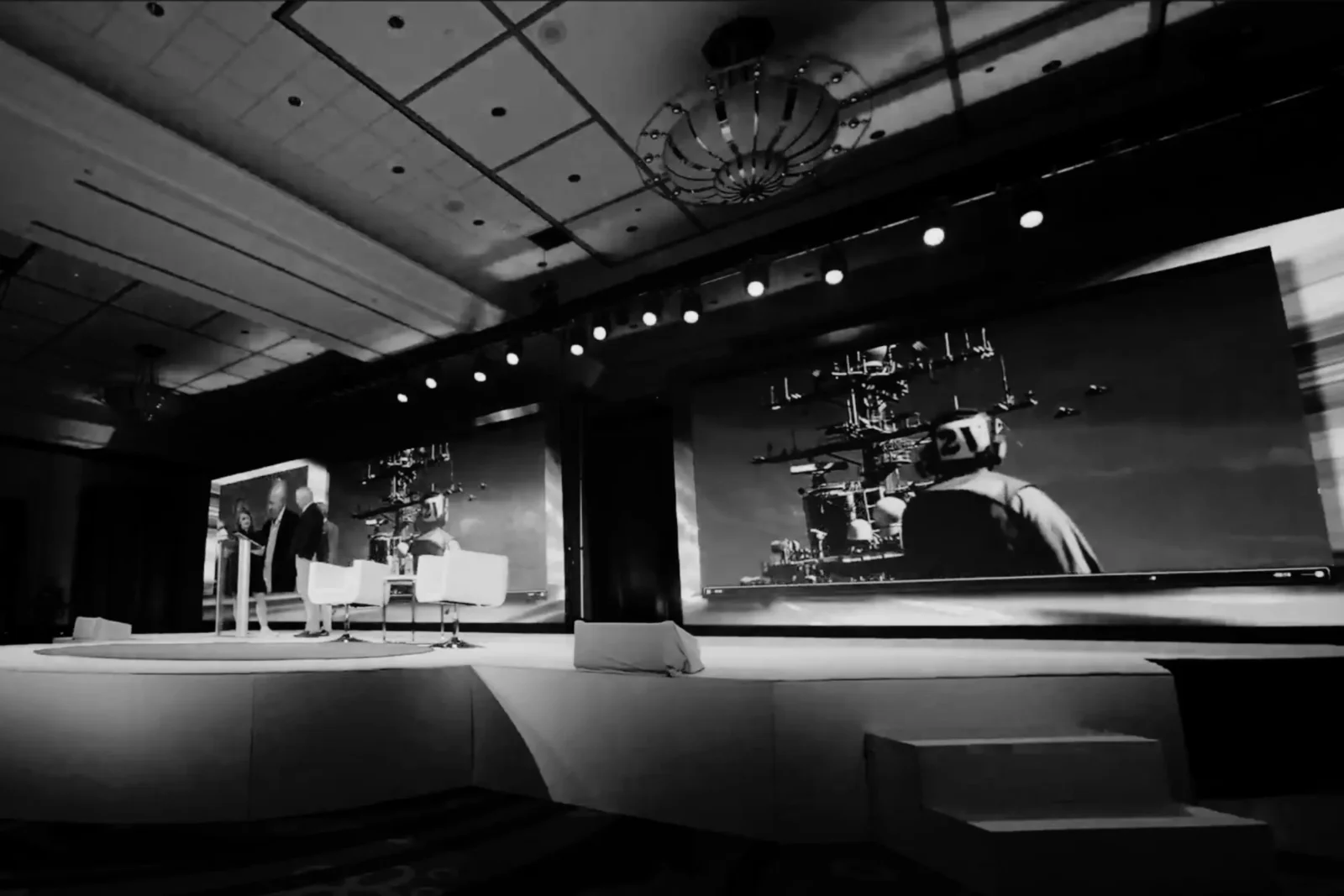
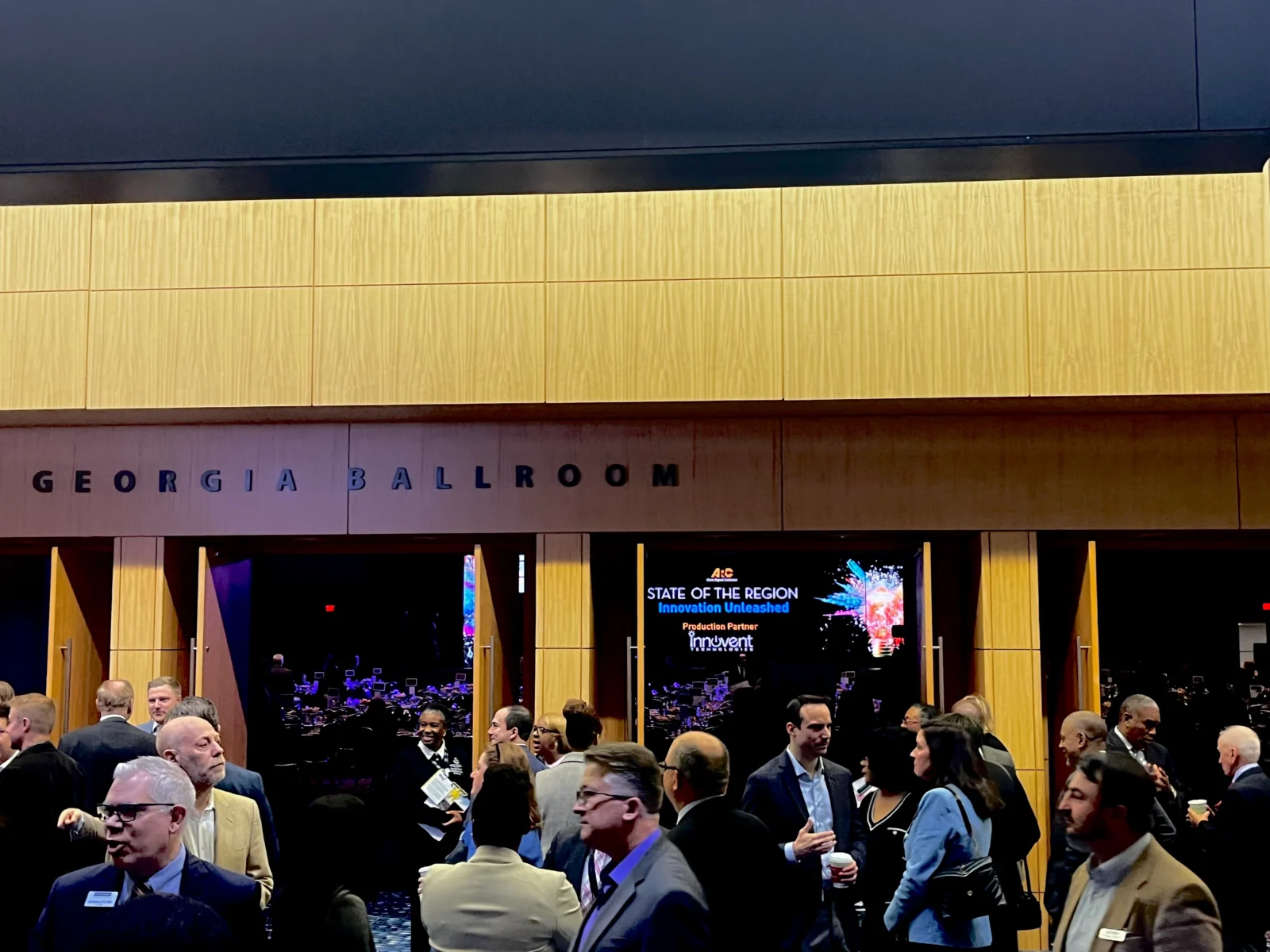
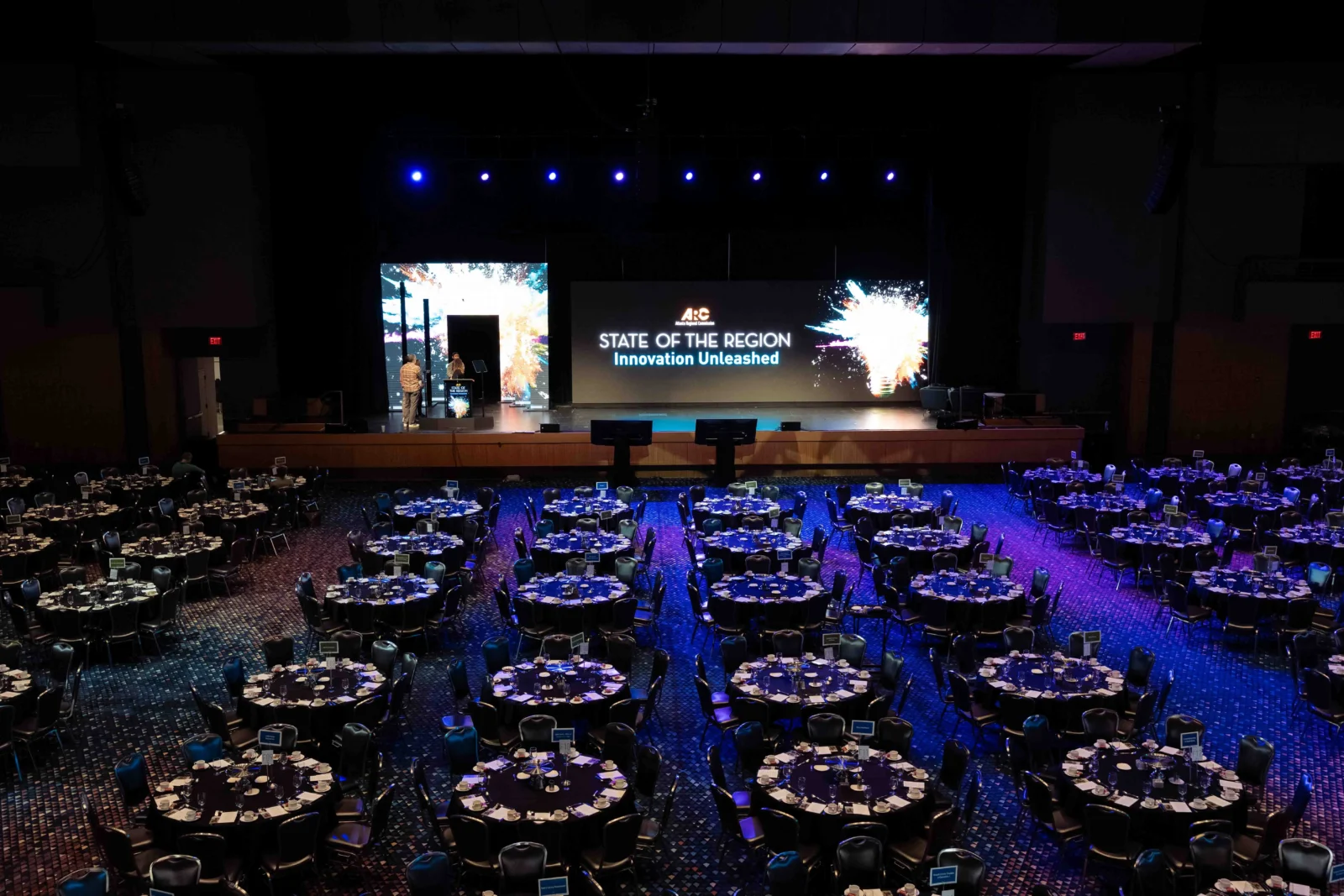
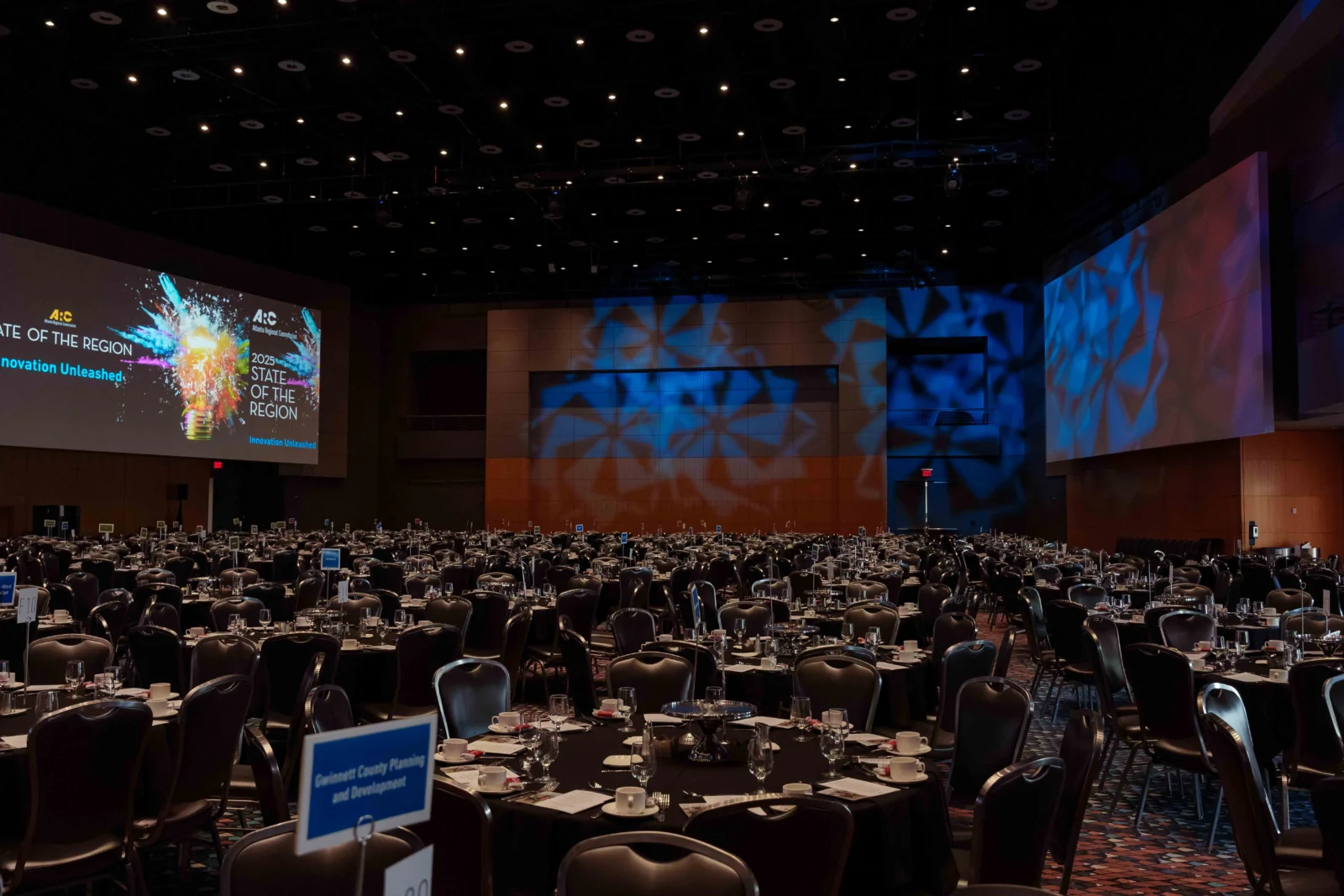
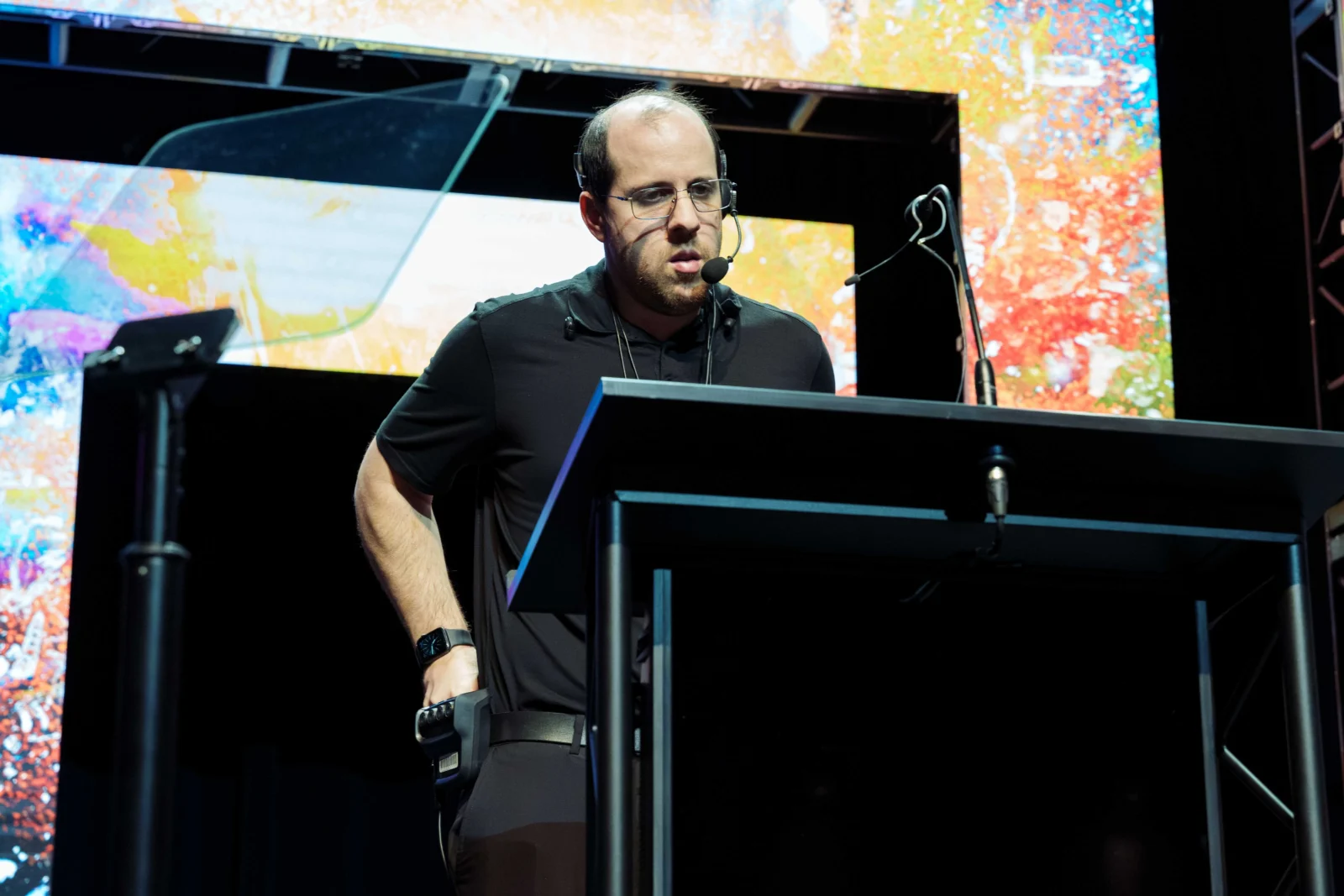
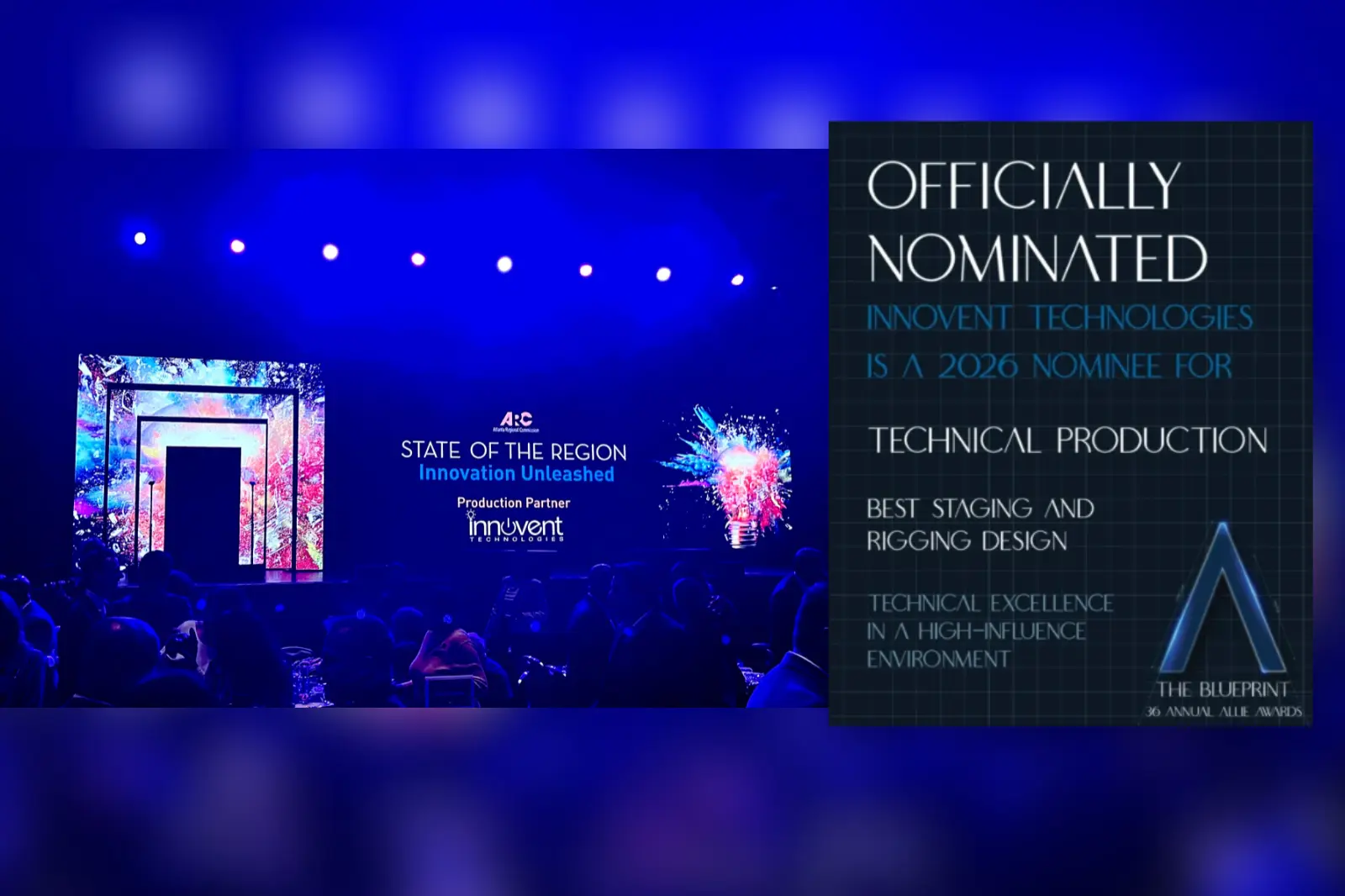
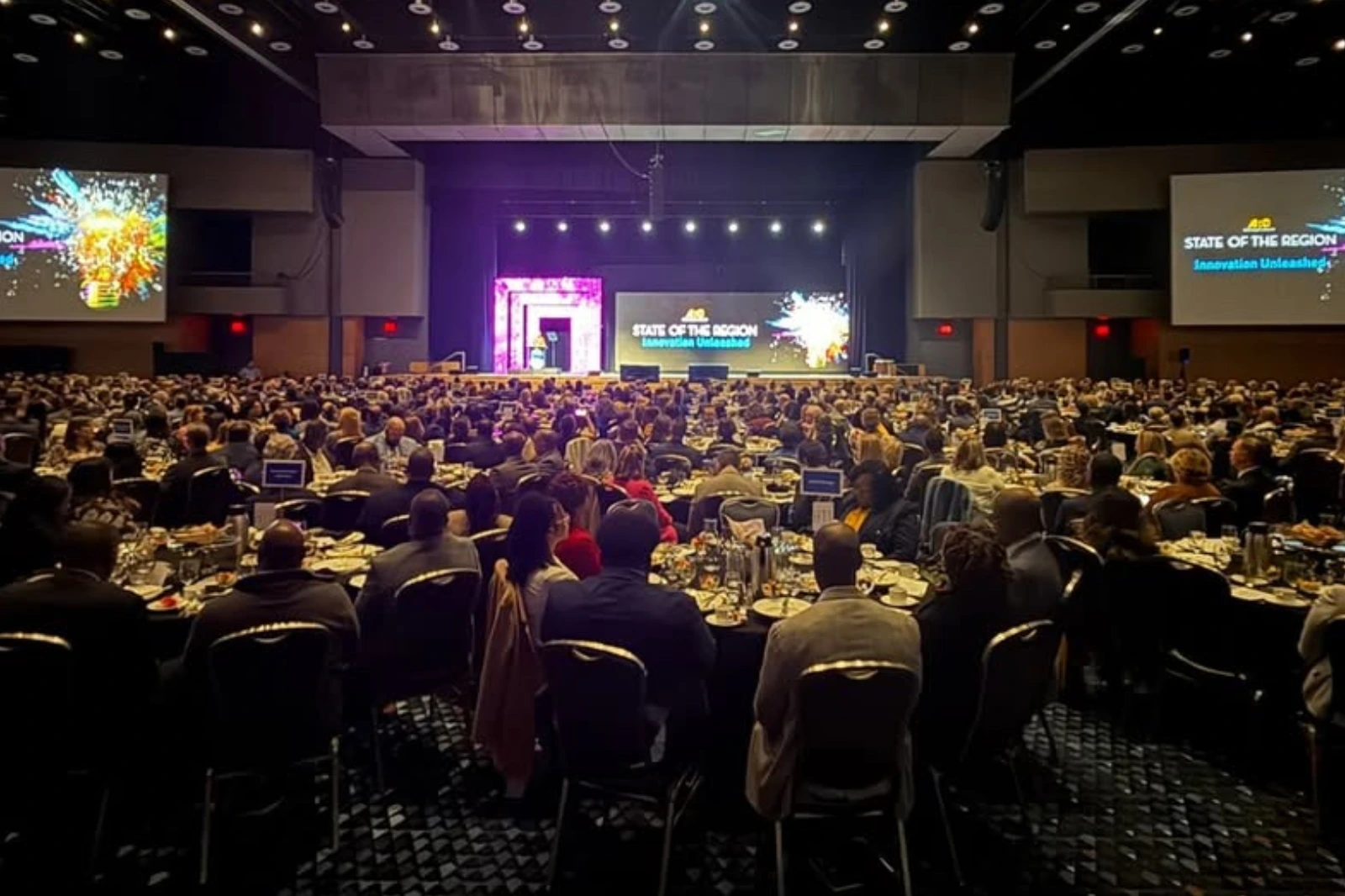
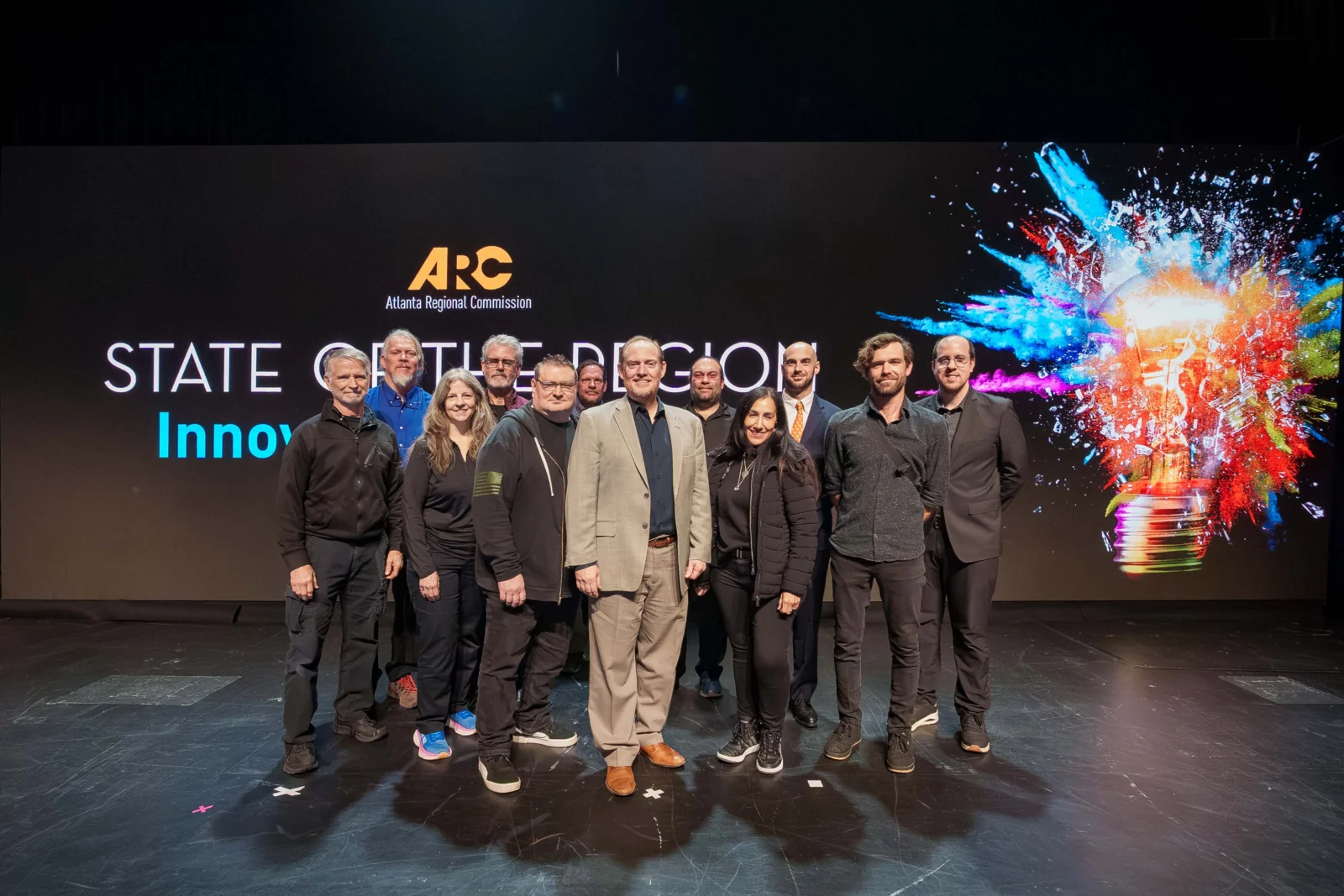
One example is the ARC State of the Region Breakfast, a large-scale leadership and regional planning event hosted in Atlanta. The production involved coordinated staging, lighting, video, and presentation support within the convention environment inside the Georgia Ballroom at GWCC.
The event required detailed coordination across scenic layout, stage design, video presentation systems, ballroom lighting, technical rehearsal planning, and onsite execution to support a polished attendee experience for regional business and civic leaders.
The production was later recognized through a nomination for Best Staging and Rigging Design, reflecting the level of technical coordination and production planning involved in executing a large-scale program within the convention environment.
Productions like this highlight an important aspect of conference AV at venues like GWCC: successful execution depends not only on equipment, but on how staging, lighting, video, logistics, and technical operations work together as a unified system.
You can also explore additional conference and event production examples on our:


Why Structured Production Teams Matter at Large Convention Venues
At facilities like GWCC, successful AV production is rarely the result of isolated technical elements. It comes from coordinated systems working together across planning, logistics, staging, technology, labor, and onsite execution.
That includes:
- Clear communication
- Pre-production organization
- Realistic scheduling
- Technical consistency
- Adaptability during live show conditions
- Experienced onsite leadership
As conferences continue to evolve into more immersive and content-driven experiences, production coordination becomes increasingly important to maintaining professionalism, pacing, and attendee engagement throughout the event.

Planning AV Production at GWCC
The Georgia World Congress Center is designed to support large, ambitious programs, but its scale also requires thoughtful production coordination from the earliest stages of planning.
Whether supporting a leadership summit, association conference, corporate meeting, or multi-day expo, AV production teams must balance technical execution with logistics, timing, attendee flow, and operational consistency across the entire event environment.
If your team is currently planning a conference or event at GWCC, our team at Innovent Technologies (https://innoventtechnologies.com) would be glad to discuss production strategy, venue logistics, and technical planning for your program.
Please feel free to Contact Our Team.