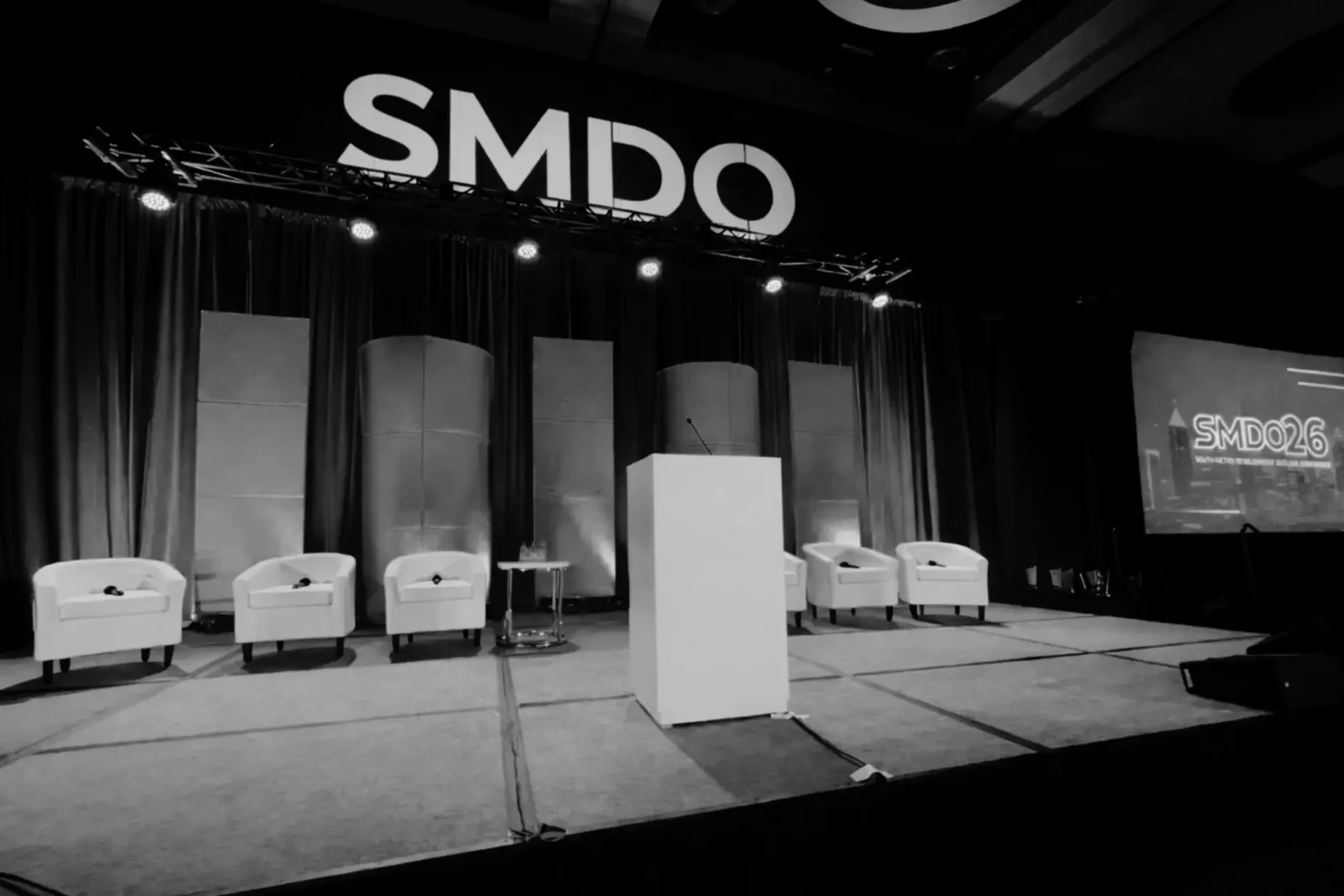
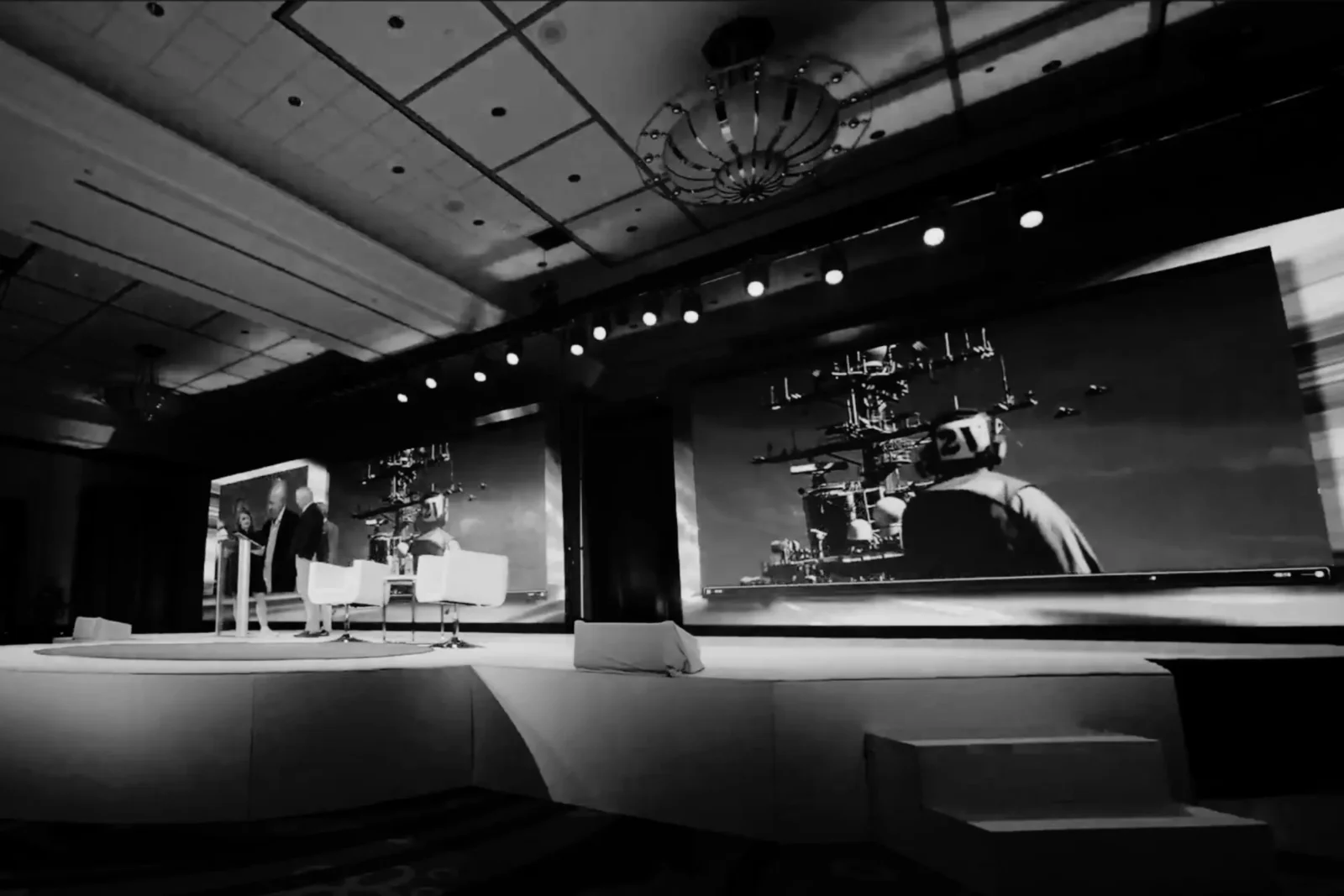
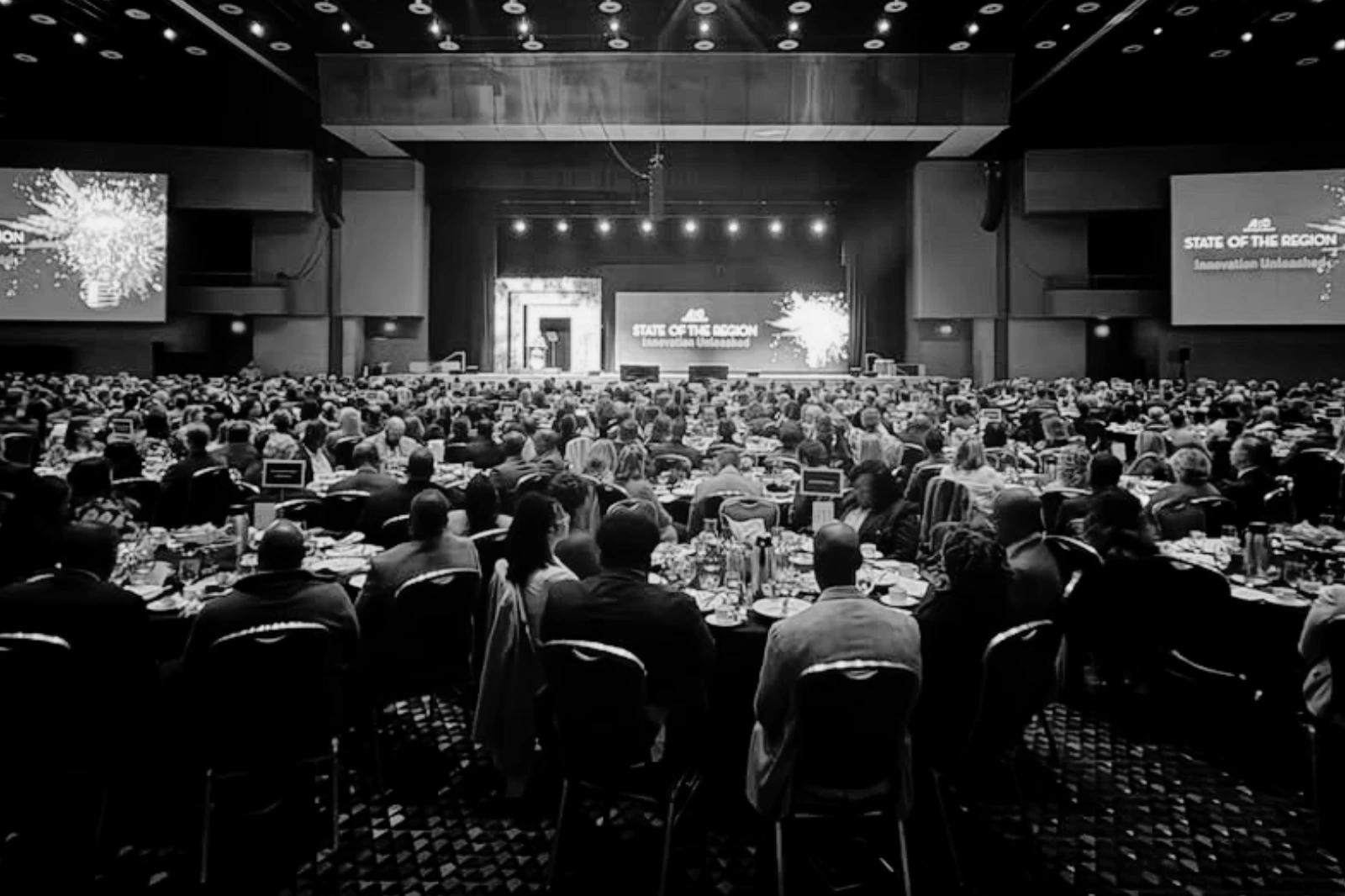
Conferences and corporate events rely heavily on event technology to deliver content, manage communication, and shape the attendee experience. Audio, video, lighting, and staging systems work together to support everything from keynote presentations to multi-room programming.
Internal teams are often responsible for managing planning, coordinating vendors, and guiding the overall direction of an event. In many cases, this structure works effectively, especially for smaller or less complex programs.
As events scale, however, event technology begins to overlap in ways that introduce new challenges. Systems that were once independent become interdependent, and decisions in one area begin to affect outcomes in another.
Many teams reach a point where internal resources can’t manage event technology and production on their own. At that stage, the question becomes less about equipment and more about who can reliably manage the system.
This shift is not theoretical. Event technology now plays a central role in how events are experienced, with 91% of organizers reporting that it has a significant impact on attendee experience. As reliance on these systems increases, the way they are planned and managed becomes more important.
The best event technology outcomes don’t come from equipment alone. They come from production teams brought in early to support internal teams as complexity grows.
Event Technology as a System, Not a Set of Components
Event technology is often approached as a list of needs: microphones, screens, lighting fixtures, and playback systems. Each element is necessary, but none operate independently in a live event environment.
Audio coverage shapes how content is heard across the room. Lighting design affects both the atmosphere and how cameras capture presenters. Stage layout influences sightlines, camera angles, and movement. Timing across presentations impacts playback, transitions, and cueing.
At scale, these elements form a connected system. The outcome depends less on the individual components and more on how they are designed to work together.
This system-level approach reflects broader industry direction. The professional AV industry is projected to exceed $400 billion globally, driven by demand for integrated environments rather than standalone equipment.
For a broader view of how these systems come together across events, see how event technology is structured in practice.
The Role of Internal Teams
Internal event teams manage timelines, stakeholders, and overall program direction. They coordinate speakers, oversee logistics, and ensure the event aligns with organizational goals.
They are effective within this scope. However, they are not typically structured to manage integrated technical systems across audio, video, lighting, and staging.
This gap is widely recognized. More than 60% of planners report that managing event technology and production is one of their biggest challenges.
As complexity increases, the responsibility required to coordinate these systems extends beyond traditional planning roles. This is not a capability issue. It is a structural one.
A closer look at how responsibility is distributed in conference production can be found in this breakdown of conference AV production at scale.
Where Complexity Emerges
Complexity in event technology develops as scale increases and more elements are introduced into the program.
Common inflection points include:
- Multi-room conference environments with concurrent sessions
- General sessions with live video (IMAG) and content playback
- Tight transitions between speakers and segments
- Venue constraints such as rigging, power distribution, and layout
These conditions are becoming standard. 74% of event planners now include virtual or hybrid elements, adding additional layers of coordination across in-room and remote audiences.
Each layer introduces dependencies. Staging affects camera placement. Lighting impacts both in-room visibility and recorded output. Content playback must align with show flow and timing.
At this point, event technology is no longer a collection of components. It becomes a system that must be designed and managed.
For additional context on how production decisions shape large-scale events, review the key decisions that define conference production at scale.

The Function of a Production Team
Production teams operate at the system level. Their role is to design, coordinate, and execute the integration of audio, video, lighting, and staging.
This work begins during planning. Production teams evaluate room layout, determine rigging and power requirements, and structure the environment to support both technical systems and program flow. CAD drawings and pre-production planning define how these elements interact before load-in begins.
During execution, production teams manage show flow, cueing, transitions, and coordination across all systems. Their responsibility is not limited to equipment. It is to ensure that everything functions together as a unified environment.
A view into how these environments come together in practice can be seen across recent conference productions.

The Importance of Early Involvement
The timing of production team involvement directly impacts event outcomes.
When production is brought in early:
- Room layouts align with technical systems (AV Production CAD Drawings)
- Rigging and power are planned in advance
- General sessions and breakout environments stay consistent
- Conflicts are resolved before they affect execution
When production is introduced later:
- Layout decisions are already fixed
- Technical limitations become constraints
- Adjustments are reactive rather than strategic
This matters more as events continue to scale. The global events industry is projected to exceed $2 trillion, reflecting both increased volume and operational complexity.
Early planning creates options. Late decisions can create limitations.
For an overview of how planning and execution are structured together, explore how production services are organized from early planning through execution.
Atlanta Context
In markets such as Atlanta, conferences and corporate events often operate at scale, with complex venue environments and multi-day programming.
Facilities like the Georgia World Congress Center, the Georgia International Convention Center, and large hotel ballrooms regularly host events that require coordination across multiple rooms, large audiences, and tight schedules.
In these environments, the difference between equipment and system-level production becomes clear. Early coordination across production elements is what maintains consistency and reliability.
For a look at venues that commonly host these programs, explore top conference venues in Atlanta for corporate events and multi-day programs.
Applied Example: System-Level Production in Practice
A practical example of system-level production can be seen in large-scale corporate meetings.
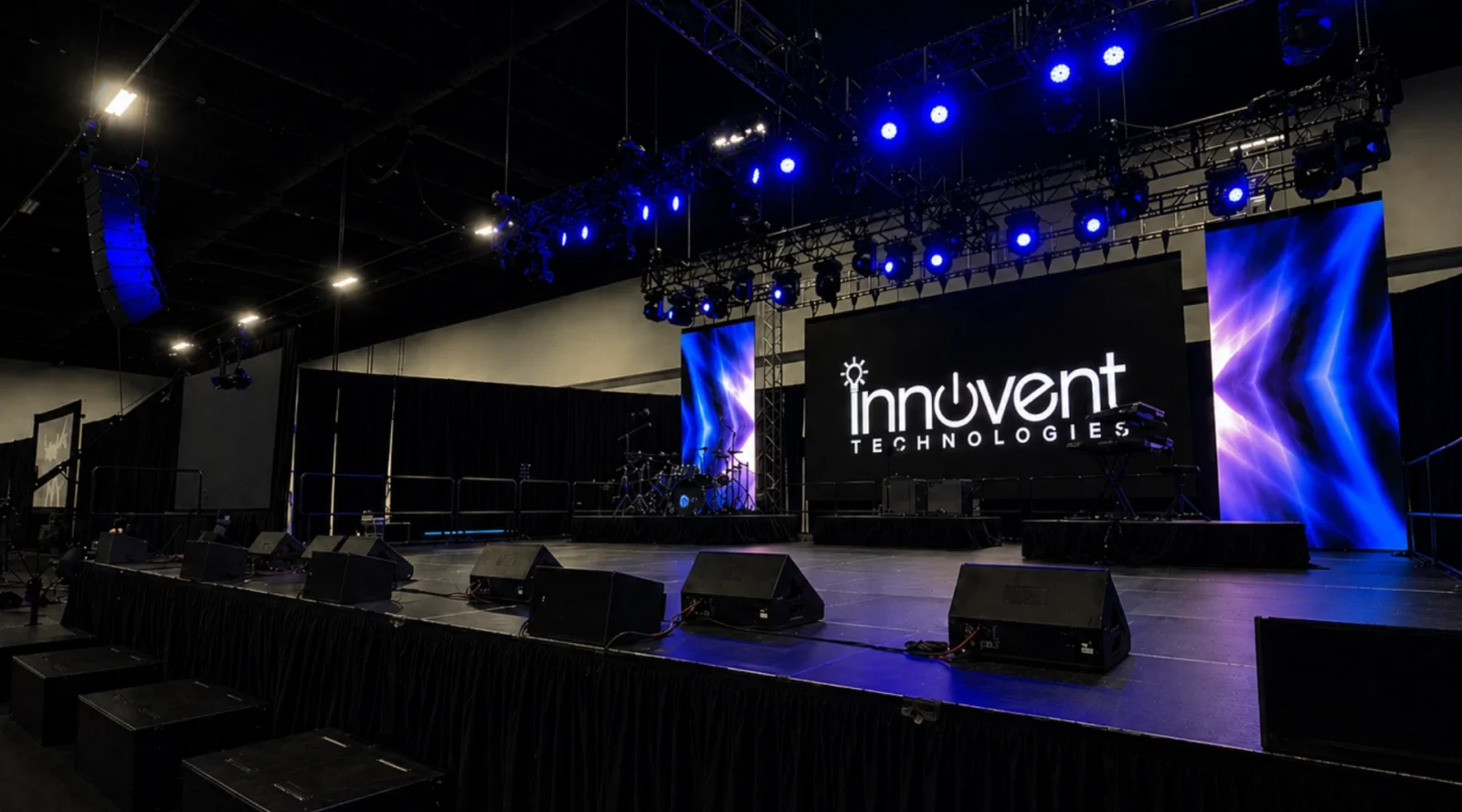
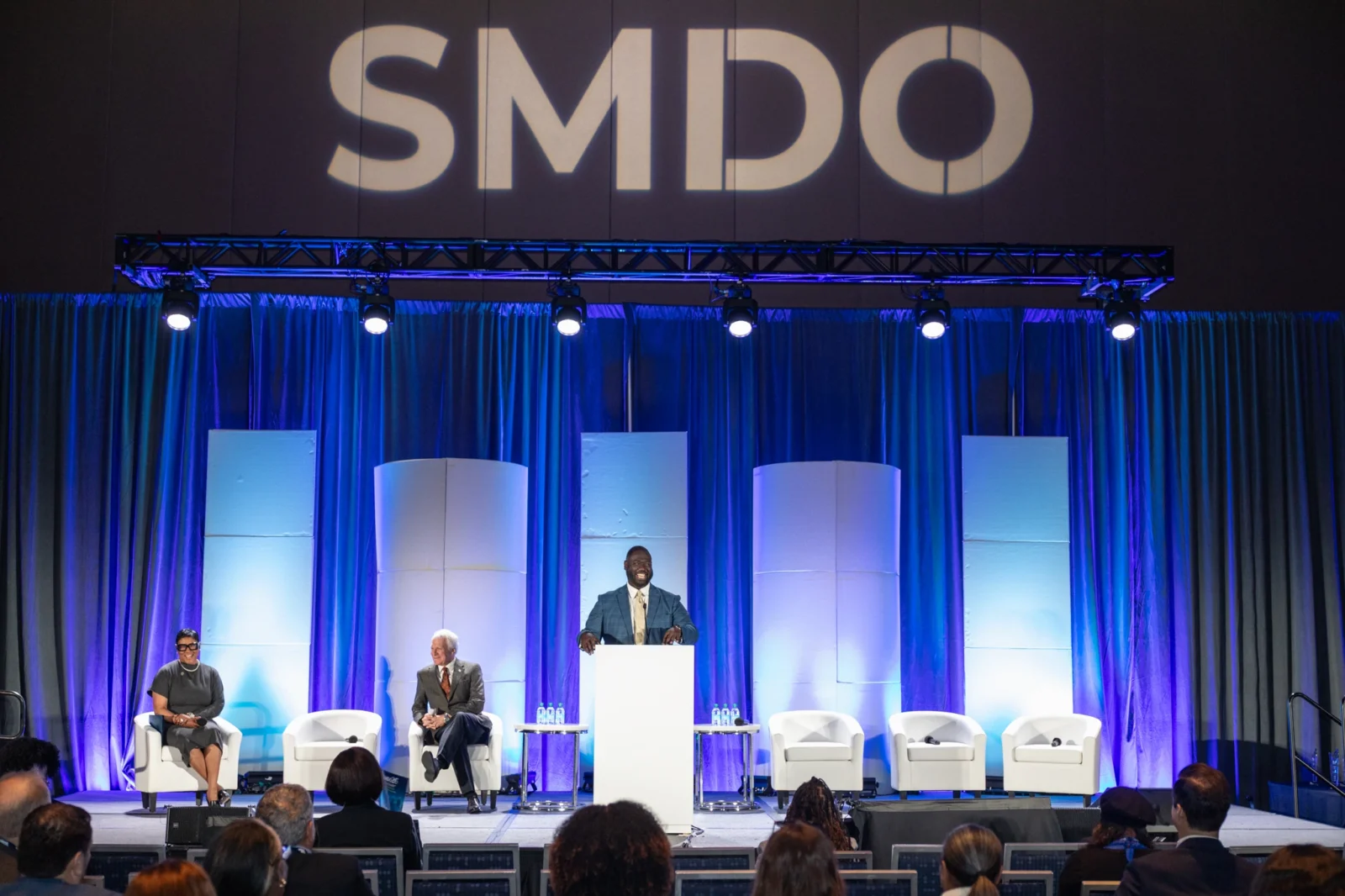
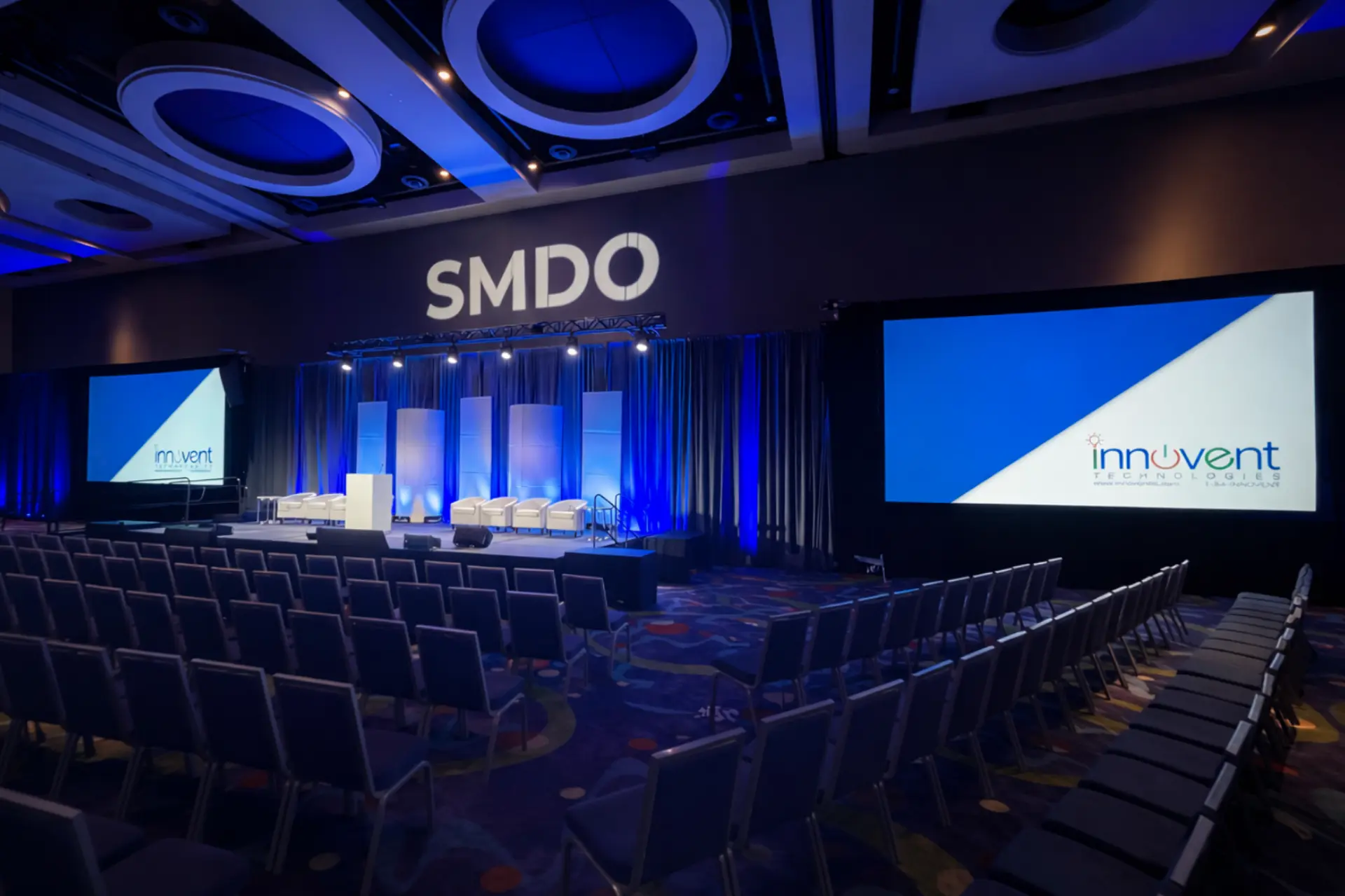
In a recent production, Innovent Technologies supported a multi-hundred attendee executive program required coordinated audio coverage, large-format video display, custom staging, and integrated lighting. Each element needed to align with the program schedule, room layout, and audience experience.
Rather than operating independently, these systems were designed and managed together. This approach allowed for consistency across presentations, transitions, and live moments.
A detailed breakdown of this system-level approach can be seen in a recent executive meeting case study.

As John Johnson, Executive Producer and CEO of Innovent Technologies, notes:
Event technology becomes complex when systems start depending on each other. The earlier those systems are designed together, the more control teams have over the outcome.
This reflects how production teams approach complex environments in practice. At scale, event technology is not managed as a set of components, but as an integrated system that must be designed early to perform reliably. That perspective comes directly from working across multi-room conferences, general sessions, and live environments where coordination determines the outcome.
Key Takeaway
Event technology outcomes are often attributed to equipment, but equipment alone does not determine results. The effectiveness of audio, video, lighting, and staging depends on how these systems are designed, coordinated, and executed together.
As event complexity increases, responsibility shifts from managing individual components to managing an integrated system. This shift introduces demands that extend beyond the structure of most internal teams.
Production teams, when involved early, provide that structure. They support internal teams by aligning technical systems with program goals and managing execution across the event lifecycle.
The success of event technology is not defined by what is used, but by how it is structured and managed. Early production involvement ensures that complex systems operate as a unified whole.
Sources
- AVIXA Industry Outlook
https://www.avixa.org/market-intelligence/market-opportunity-analysis-reports-(moar)https://www.avixa.org/insight/market-opportunity - Bizzabo Event Experience Report
https://www.bizzabo.com/blog/event-trends-report - Market Research Future
https://www.marketresearchfuture.com/reports/event-management-software-market-1399https://www.cvent.com/en/resource/event/event-planner-sourcing-report - Skift Meetings / EventMB
https://skift.com/meetings/event-technology/ - Allied Market Research
https://www.alliedmarketresearch.com/events-industry-market